Three thousand products, three storefronts, one catalogue
01 — The brief
Sell to schools, the way schools actually buy
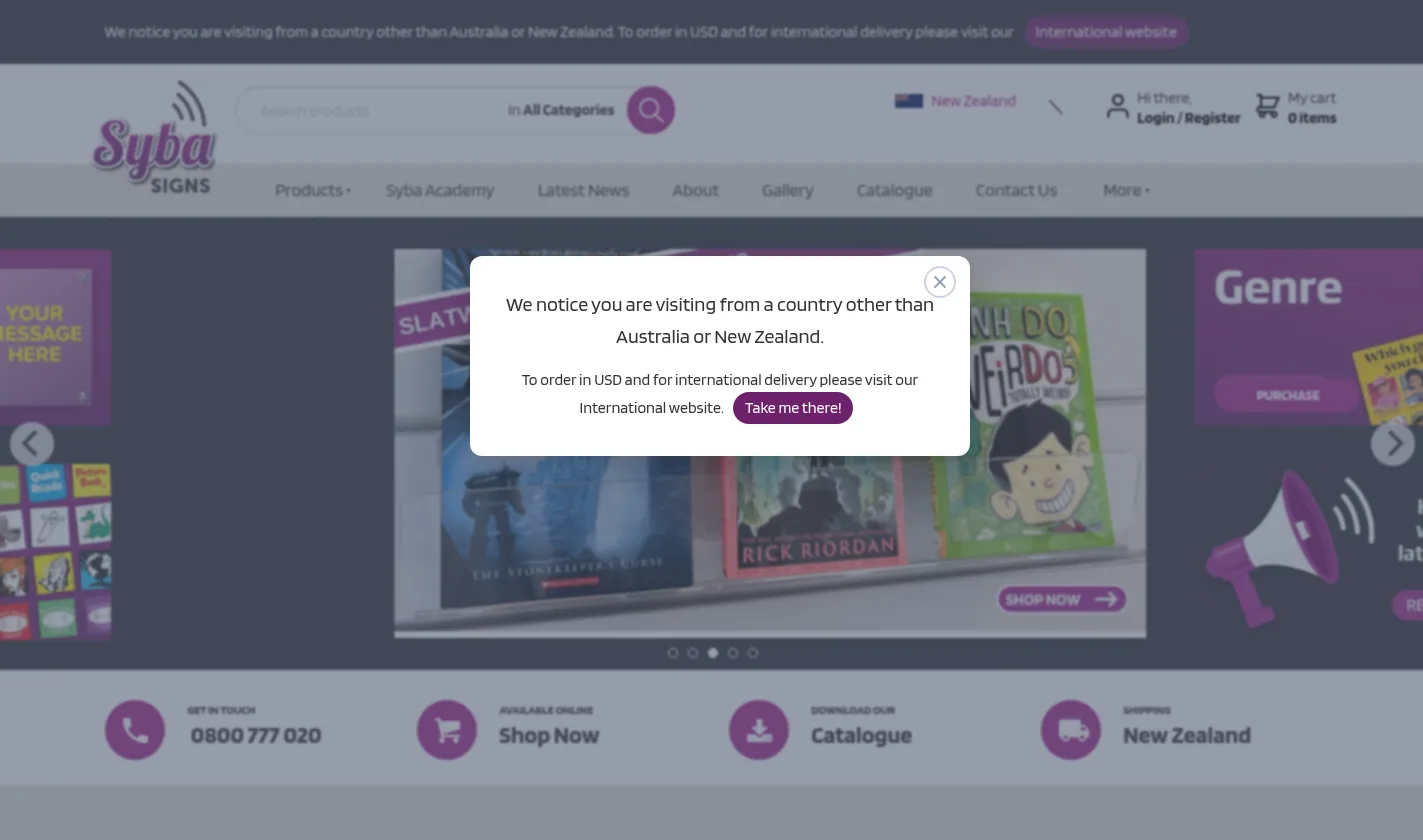
Syba Signs was founded in 1998 by a teacher librarian, and its signage is now in more than 10,000 schools worldwide. The catalogue is enormous and highly specific: spine labels, shelf dividers, wall graphics, bilingual Te Reo Māori ranges, posters and starter packs.
Schools do not buy like retail customers. They compare a printed catalogue, they order against school accounts, they need lists of exactly which labels match which classification, and the person choosing is rarely the person paying.
Syba also sells into three markets at three price points, so the same catalogue has to appear as a New Zealand store, an Australian store and an international store in US dollars without being maintained three times.
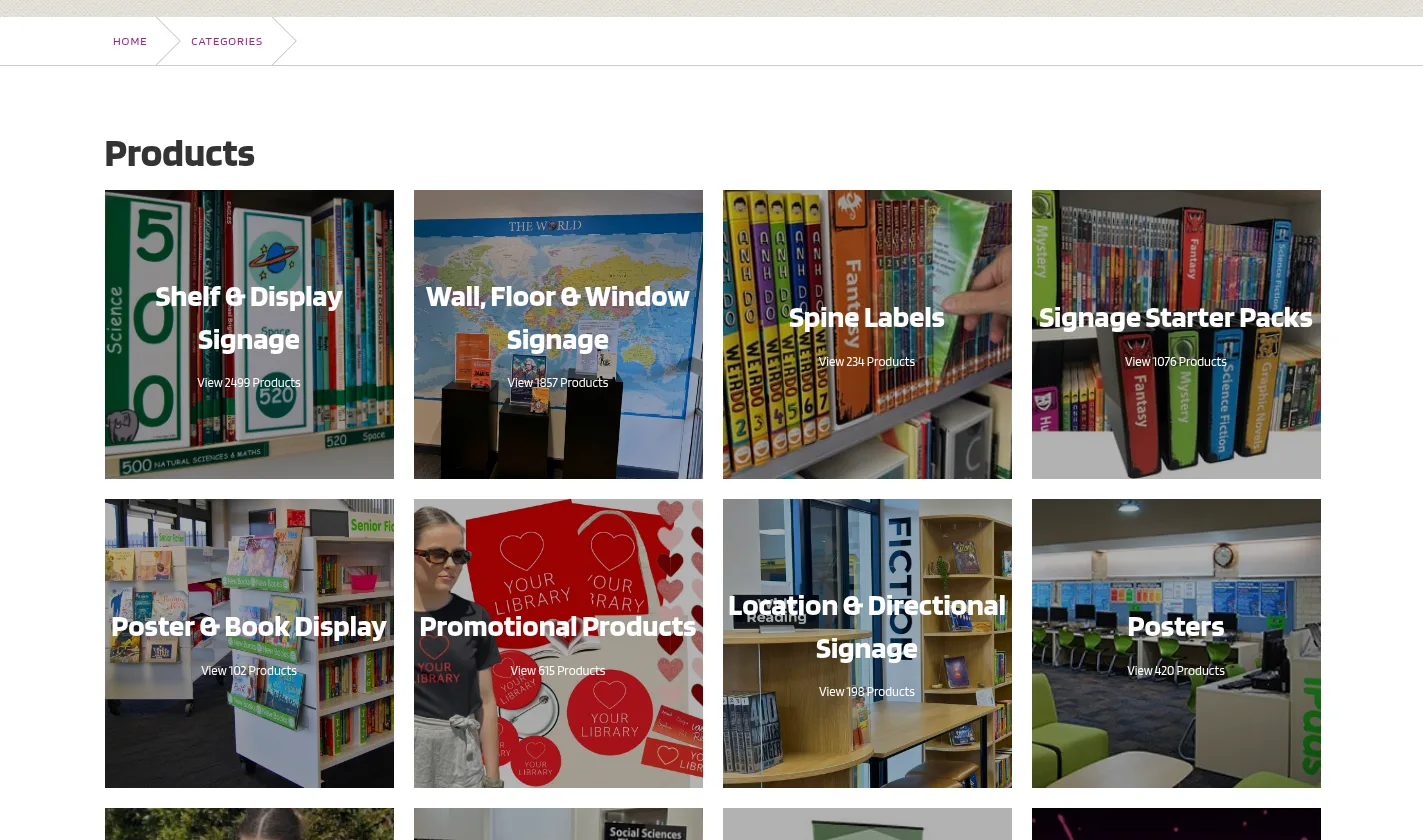
A catalogue built for browsing by need Fourteen top level categories break a three thousand product range into the way a librarian thinks: shelf and display, spine labels, wall and window, starter packs, promotional, directional, bilingual and teaching resources.
By the numbers
A very large catalogue, kept current
Feature
The store is built for a school office rather than a shopper. Accounts remember what a school ordered last time, invoices can be downloaded from the account, and the printed catalogue stays in step with the online range.
- School accounts with order history
- Invoice download from the customer's account
- Downloadable catalogue matching the online range
- Label and divider lists for matching an existing collection
- International visitors prompted to switch to the USD store
- Options and quantities on customisable signage
Three markets
One catalogue, three storefronts
New Zealand, Australia and the rest of the world buy the same products at different prices in different currencies.
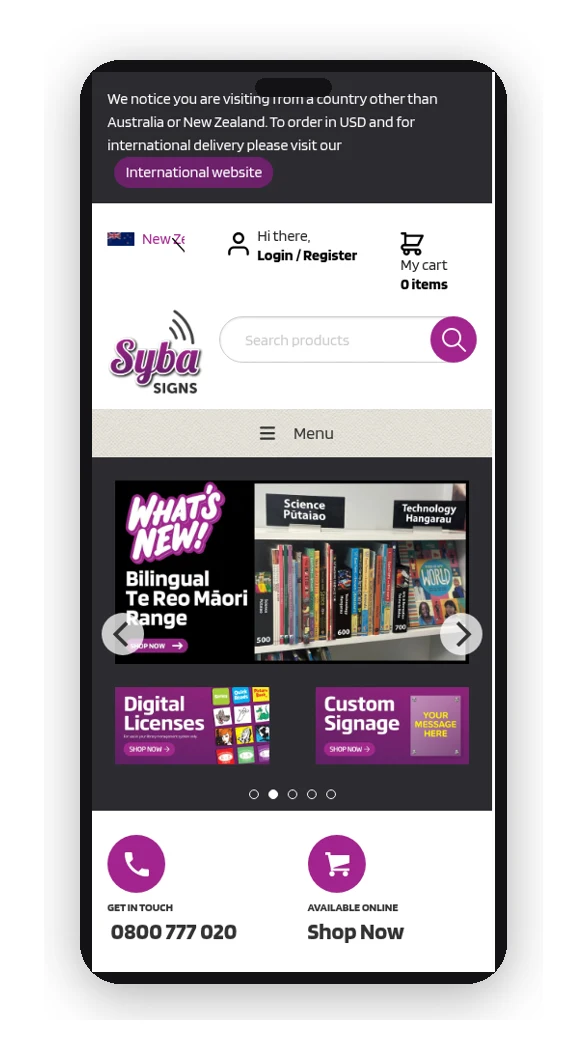
Each region has its own storefront with its own pricing, currency and shipping rules, and visitors from outside Australasia are prompted to switch to the international store instead of being quietly priced in the wrong currency.
Product data and imagery are maintained once, which is the only way a small team keeps three thousand products current across three sites.
02 — The process
How we got there
- 01
Auditing the catalogue
Three thousand products, their categories, options and cross references mapped before design, because the structure is the product here.
- 02
Structuring the range
Fourteen categories built around how librarians describe a need, with clearance, new products and bilingual ranges surfaced rather than buried.
- 03
Building the three storefronts
New Zealand, Australian and international stores on one platform, with currency, pricing and shipping handled per region.
- 04
Ordering that suits schools
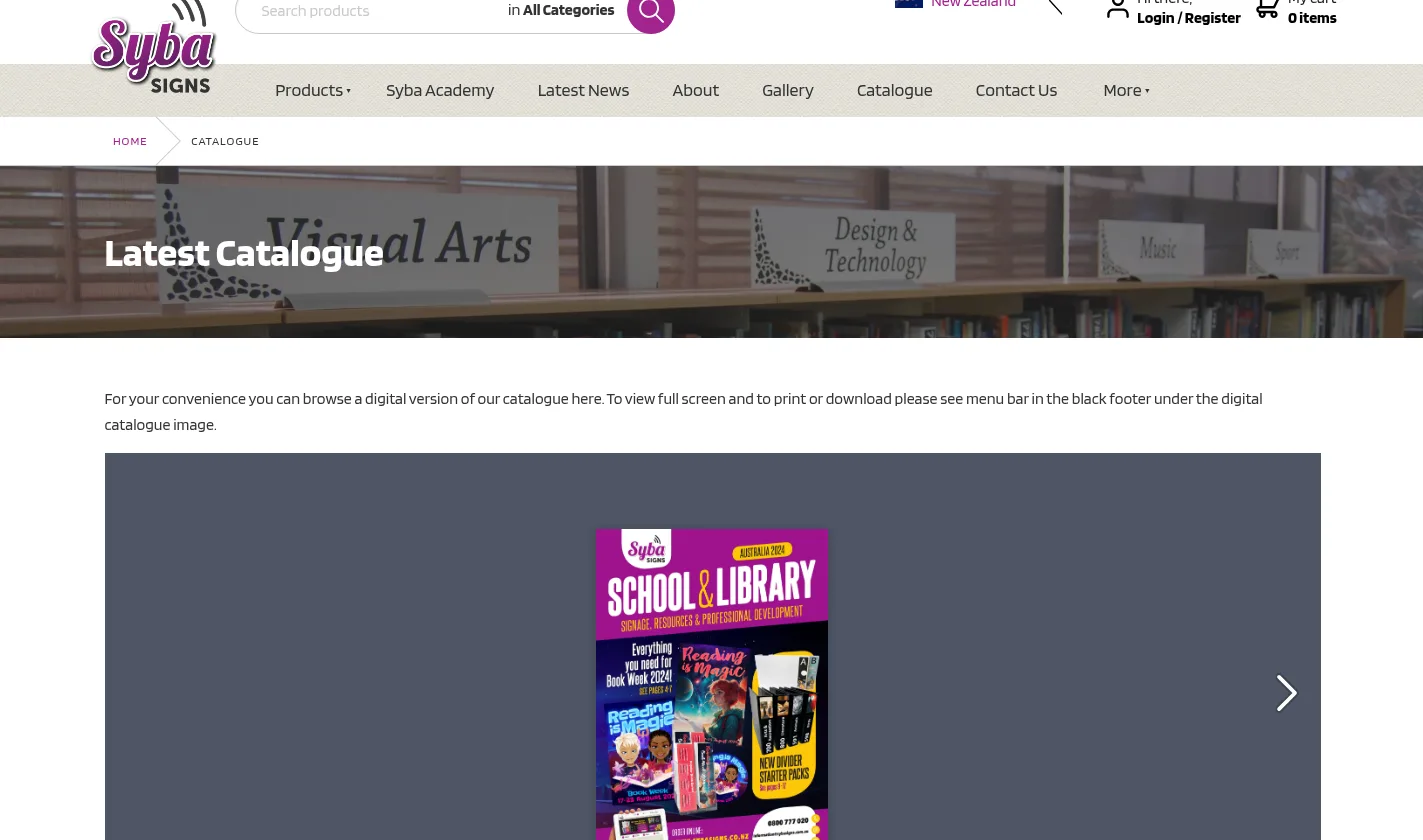
Accounts, order history, invoice downloads, quote friendly documents and a printed catalogue that matches the site.
- 05
Content, gallery and academy
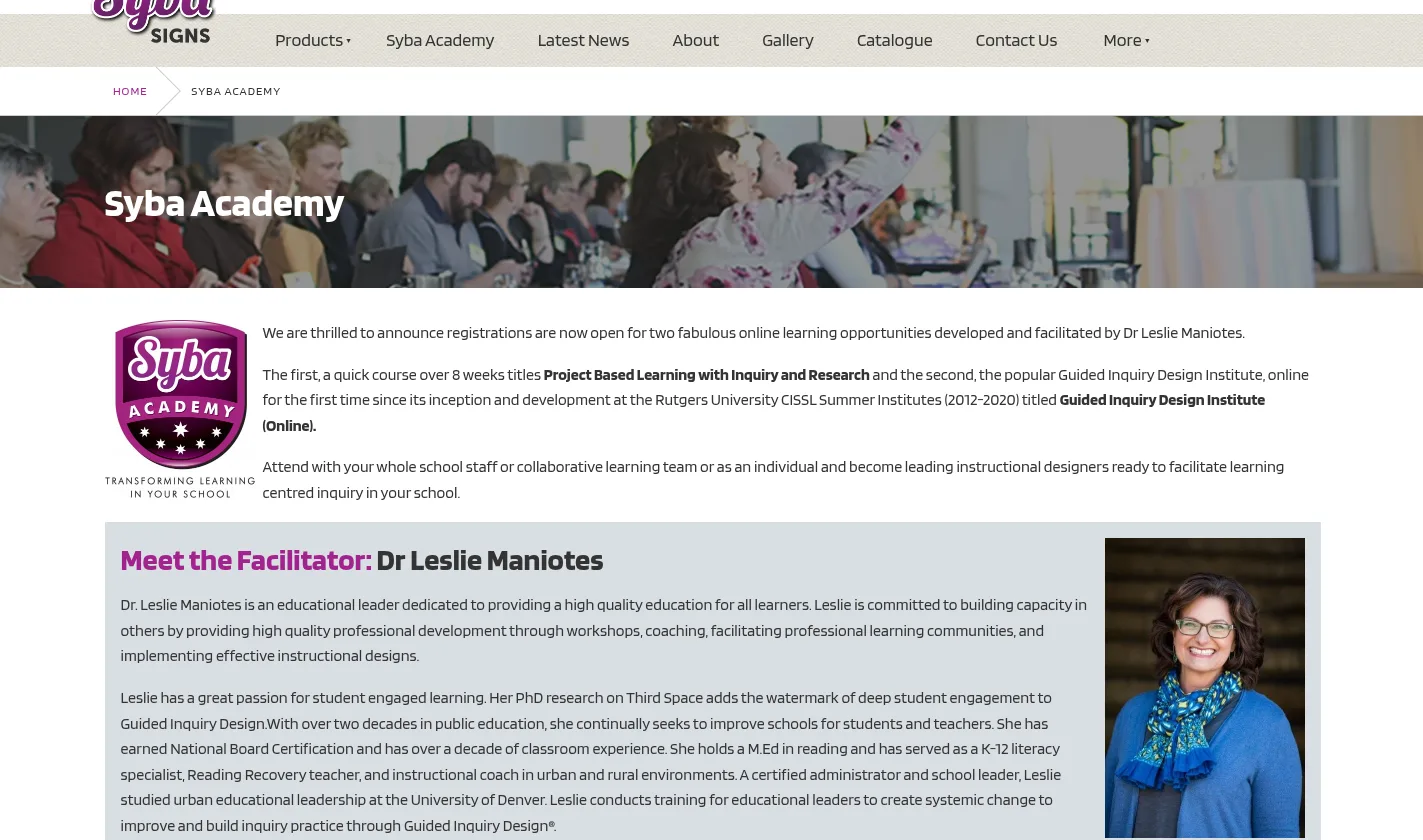
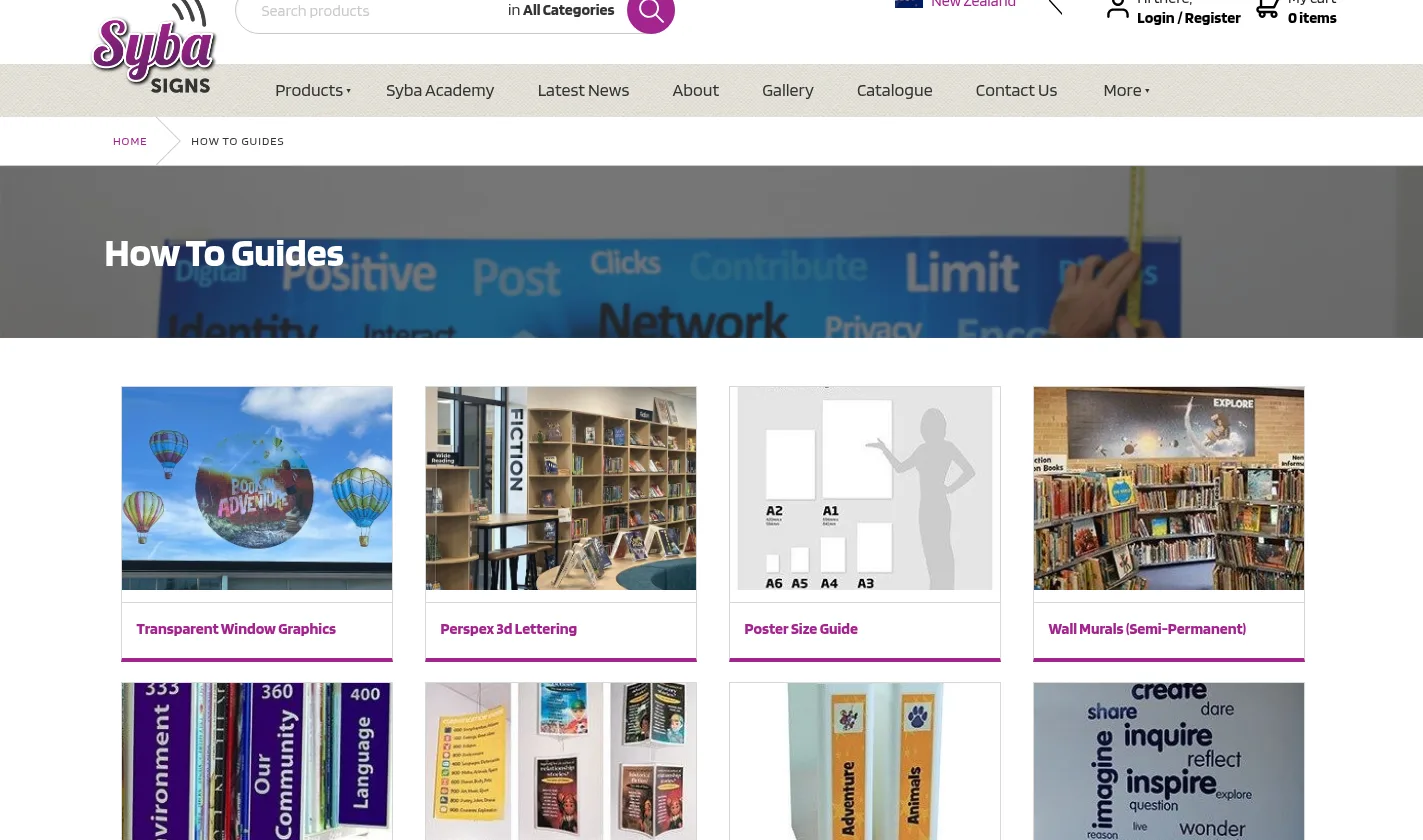
How to guides, label lists, a library makeover gallery, a display competition and the Syba Academy course programme.
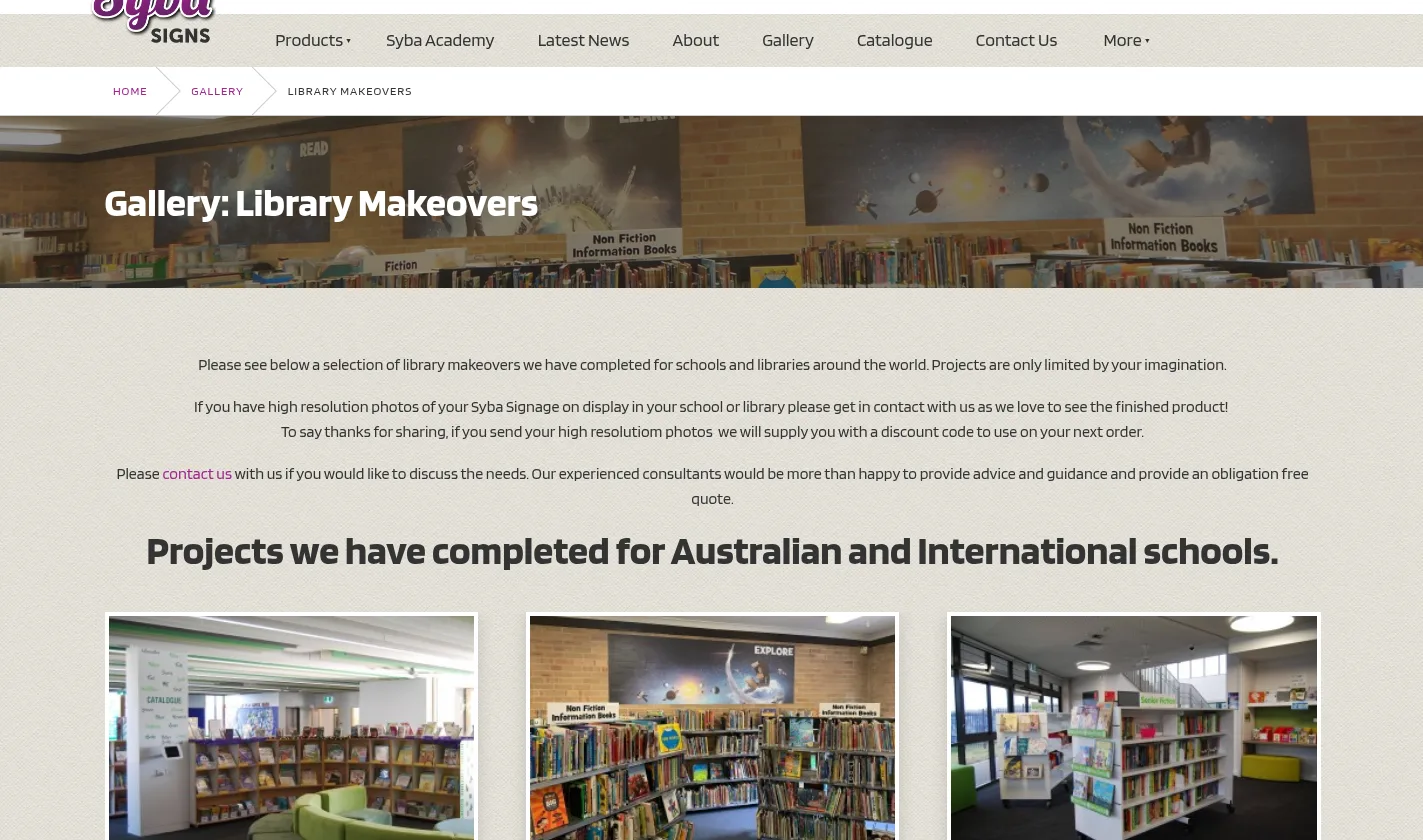
Proof from real libraries A gallery of library makeovers, competition entries and customer photos does the selling a product shot cannot: what the signage looks like once a school has it on the shelves.
03 — The outcome
A specialist supplier with a shop that fits its market
Three storefronts, three thousand products and an academy, run from one platform by a small team.
Schools can find the exact label for their classification system, order it on account and see what it looks like installed before they commit.
The catalogue, the guides and the gallery keep earning search traffic in a category where buyers are searching for very specific things.
Ready for a website like this?
Let's build the next one together
Design, build, content and search, handled by one Auckland team.