
Repositioning cleaning as compliance, in nine pages
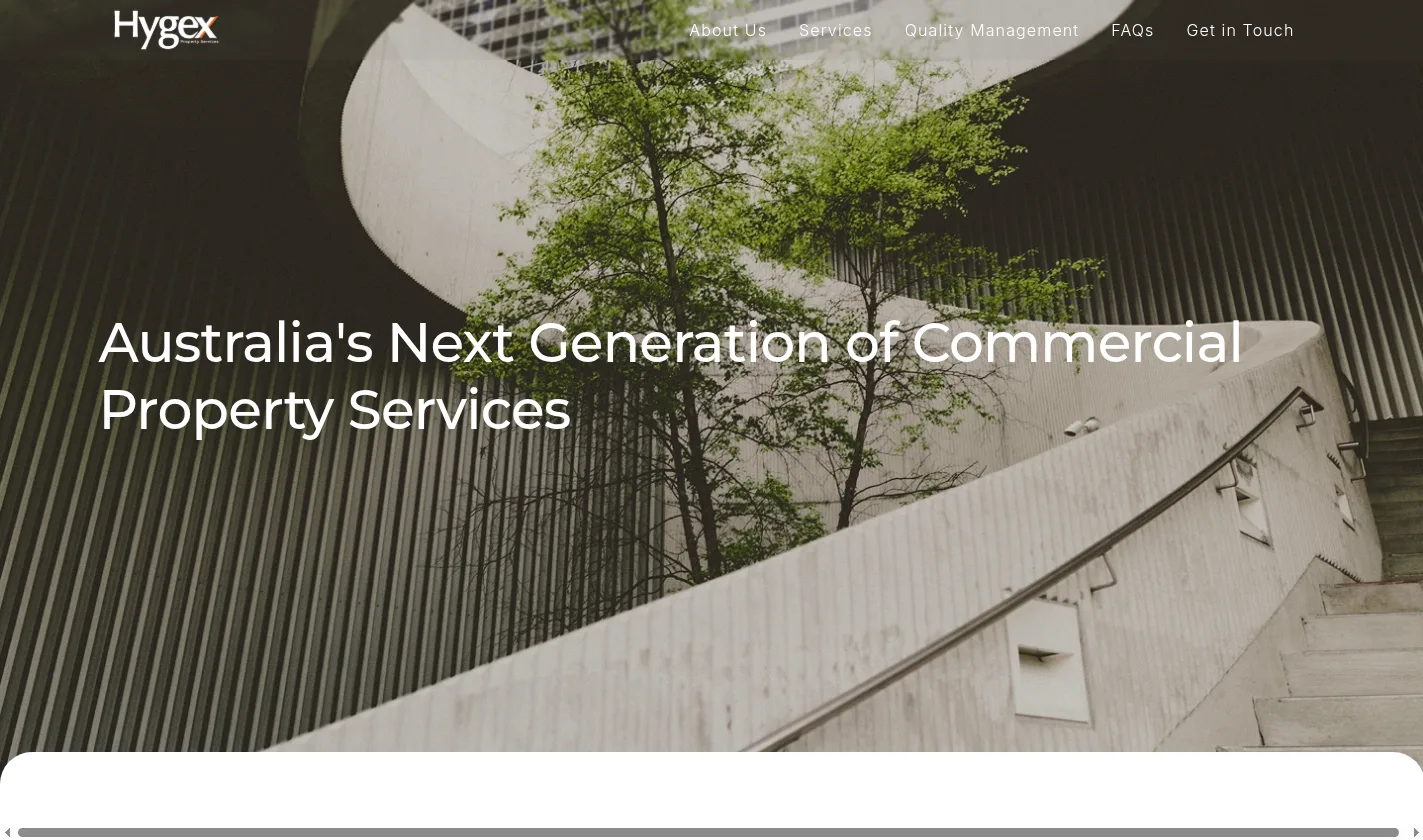
01 — The brief
Get out of a race to the bottom
Commercial cleaning is tendered on price, which pushes quality and wages down and leaves the buyer comparing hourly rates. Hygex was built to compete somewhere else entirely.
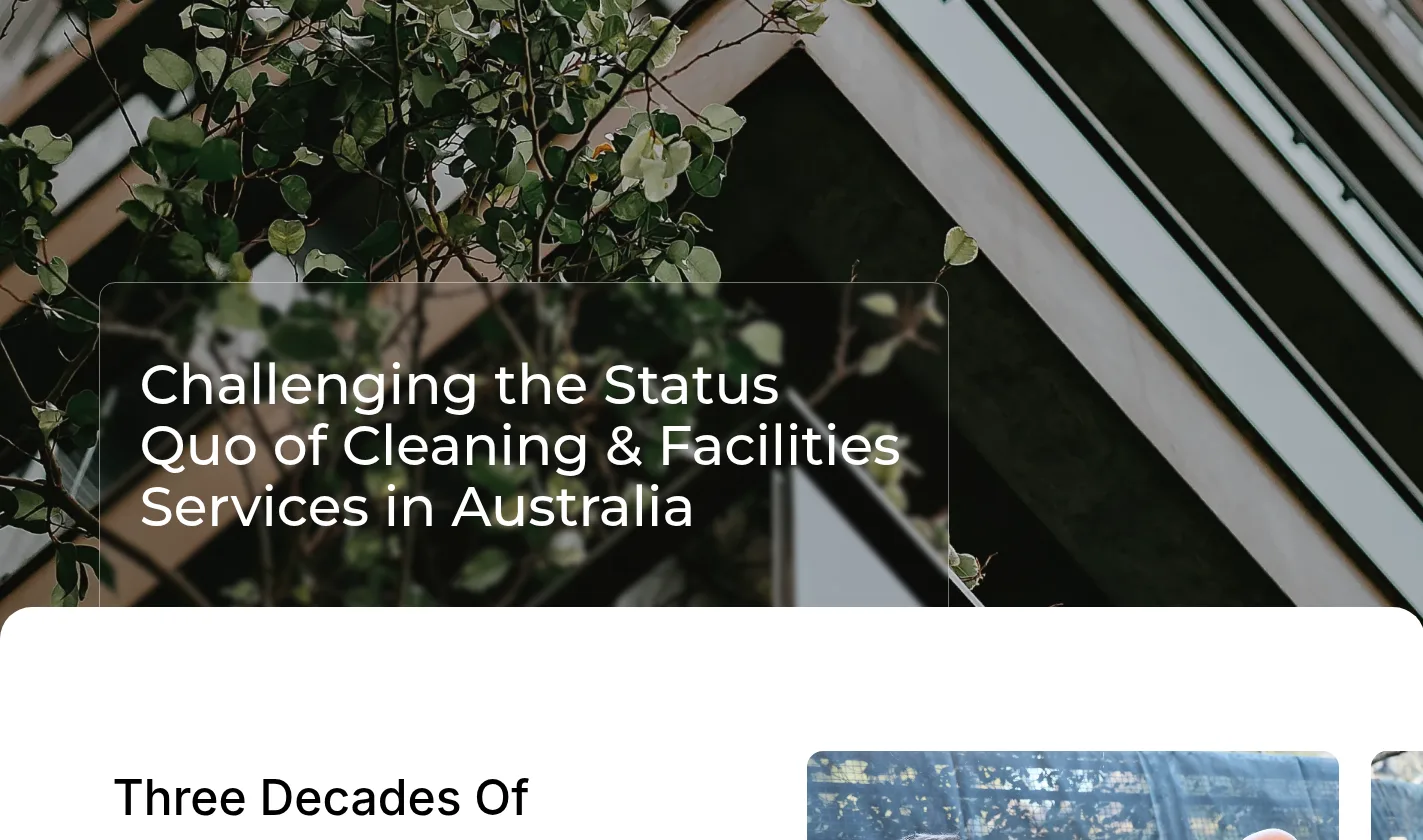
The founders had already run a successful cleaning business through the 1990s and beyond. The new brand exists to sell hygiene outcomes, infection control and asset protection to organisations that carry real compliance risk: government sites, industrial facilities, public and community buildings.
The brief was a site that argues that case in as few pages as possible, with the certifications, systems and methodology doing the persuading, and no attempt to look like the cheapest option.
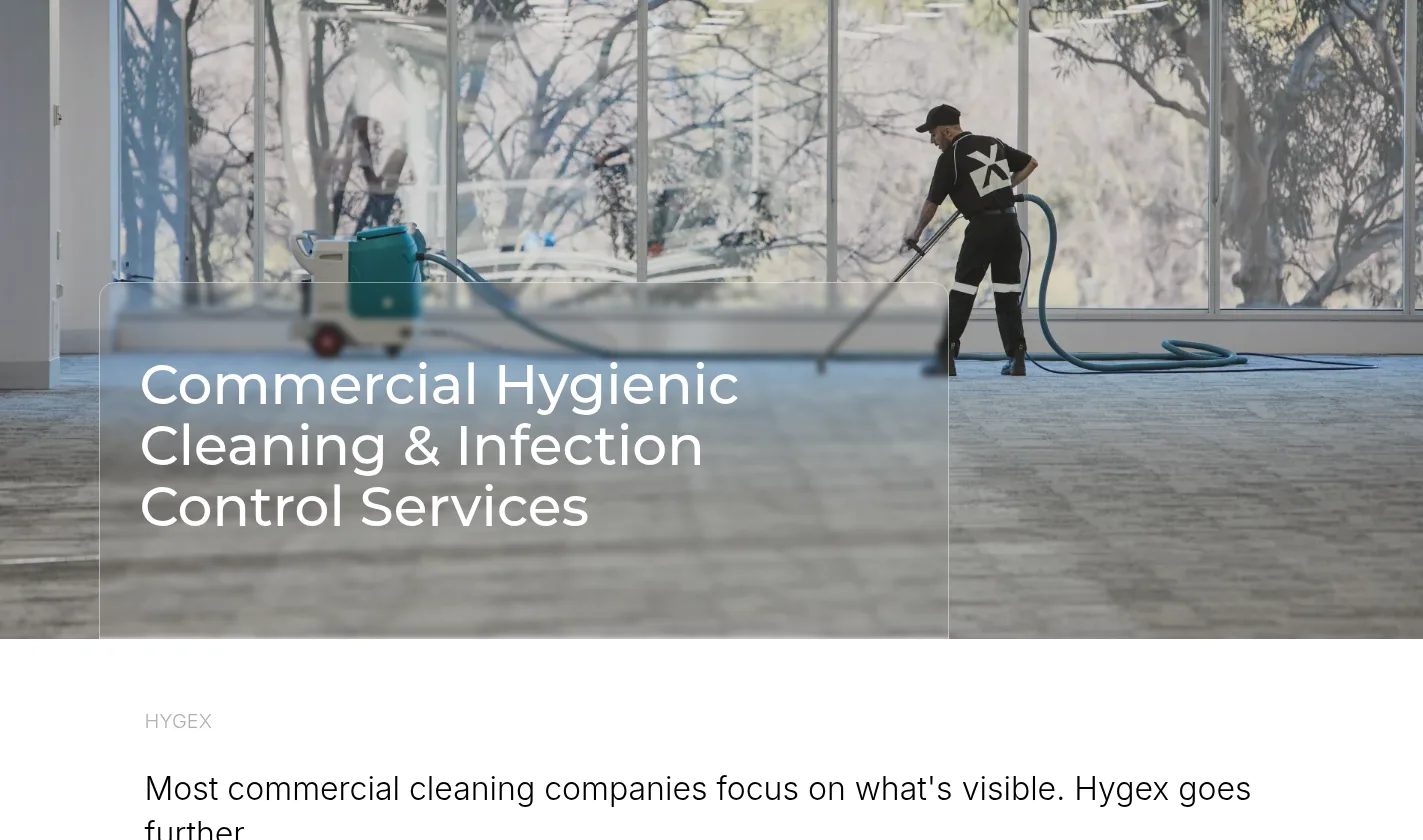
Hygiene first, presentation second The cleaning page leads with the inside out methodology: pathogens, contaminants and hazards dealt with at the source, then presentation. It is the single idea that separates the brand from a cleaning quote, so it gets stated before any service list.
By the numbers
A small site making a large claim
Feature
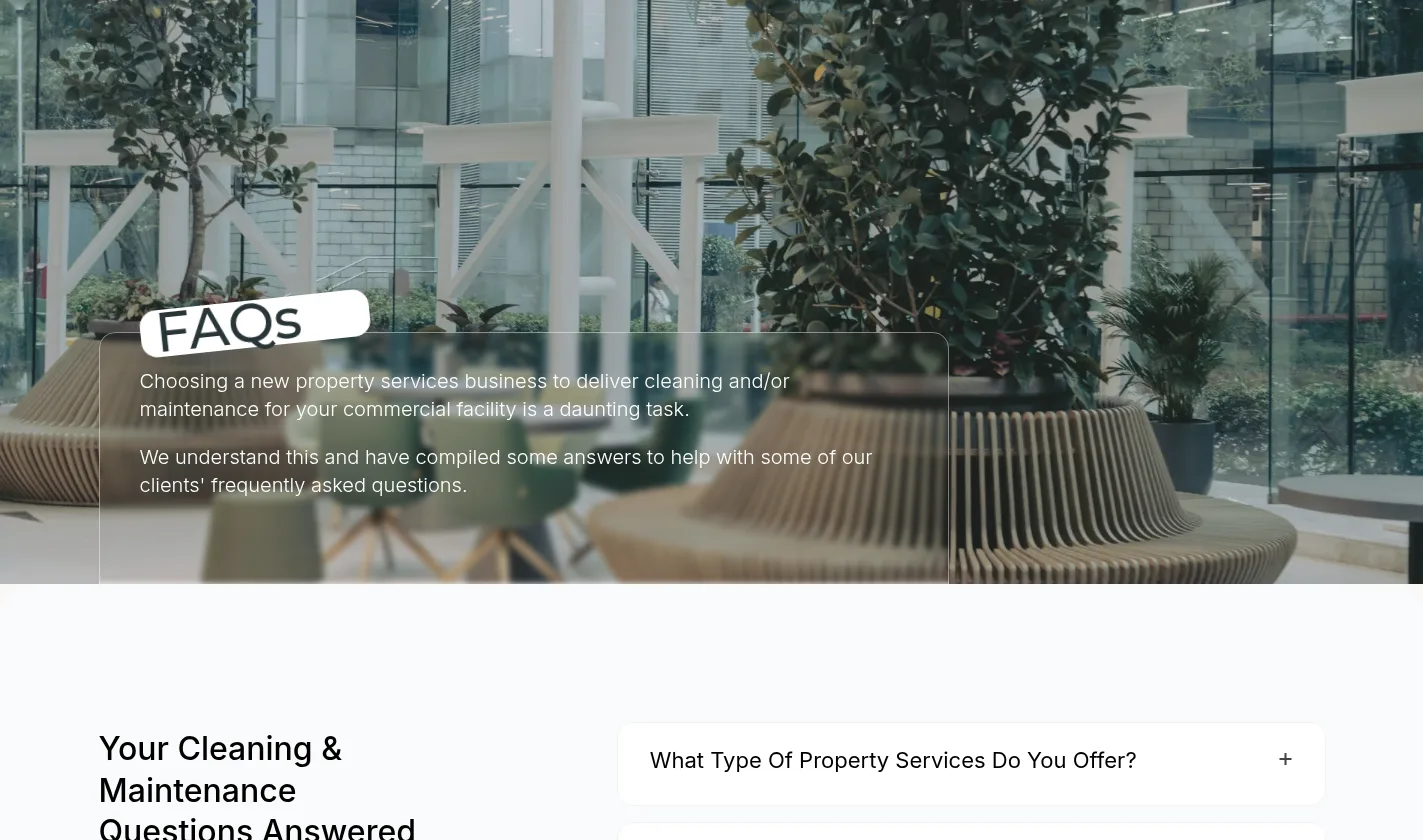
Everything on the site is written for a procurement or facilities audience, so the proof points are systems and evidence rather than adjectives. Clients get their own login to track service levels.
- ISO 9001, 14001 and 45001 certified integrated management system
- CMMS job tracking for maintenance, with asset history
- iAuditor reporting with time stamped before and after photos
- Client logins to monitor service levels and audit results
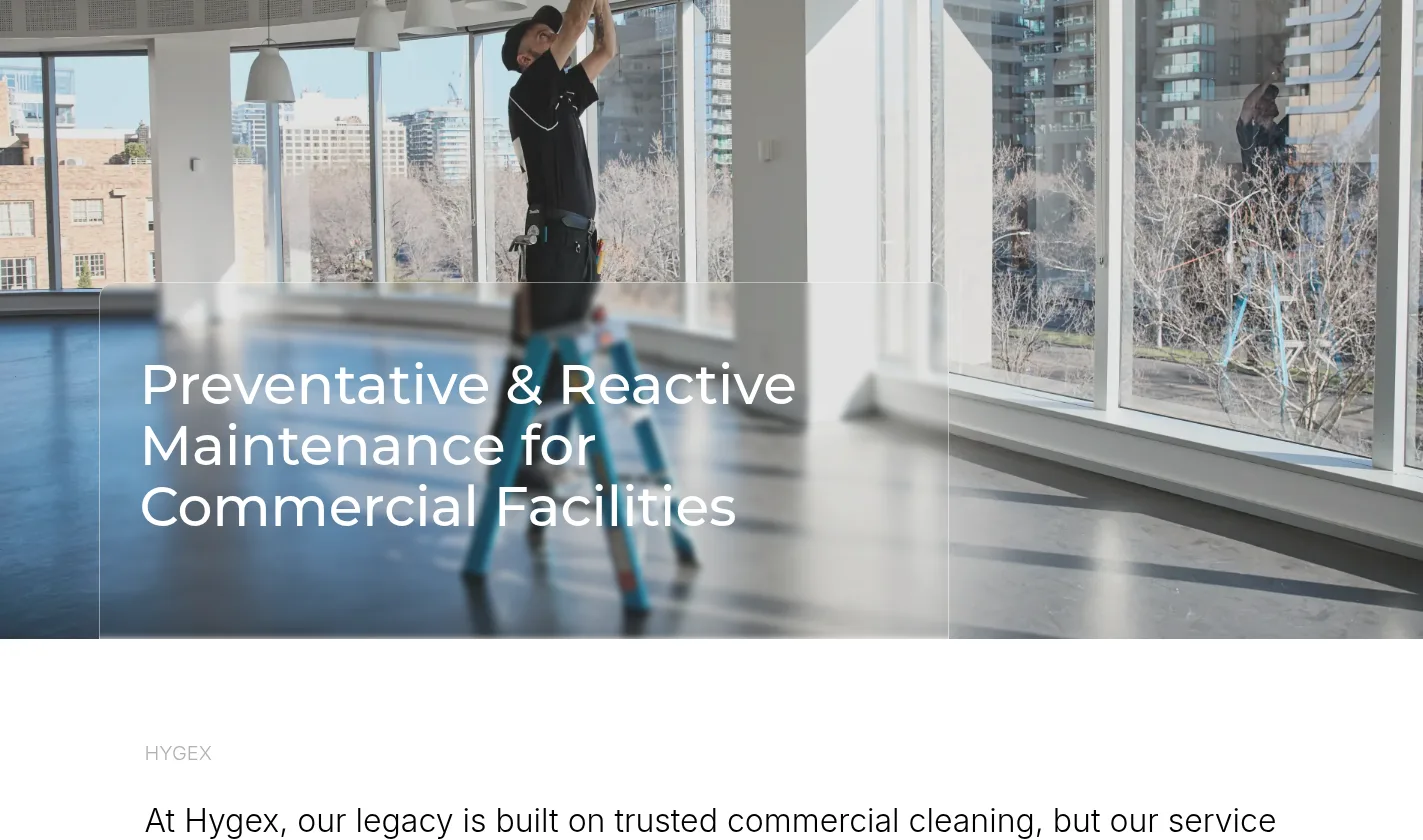
- Trade qualified maintenance, from reactive repairs to minor works
- 24/7 response line for emergency call outs
The argument
COVID as the reason this business exists
The site does not avoid the pandemic, it uses it.
The about page makes the case directly: the industry had been competing on price and under delivering, the pandemic proved cleaning is a public health function, and Hygex exists to hold on to that lesson.
For a facilities manager who has been through an outbreak in their own building, that framing is the most persuasive thing on the site.
02 — The process
How we got there
- 01
Defining the positioning
The brand needed a defensible reason to cost more than a cleaning contract, so the science based, compliance first angle was settled before any design work.
- 02
Designing for procurement
A confident corporate interface, client logos, clear service divisions, and copy structured the way a tender response is read.
- 03
Writing the proof
Certifications, safety systems, reporting platforms and the methodology written out in the language of WHS legislation and KPIs.
- 04
Keeping it to nine pages
Home, about, two service divisions, quality management, FAQs and contact. Every page earns its place; nothing is there for the navigation's sake.
- 05
Reviews and enquiry
Client reviews pulled in as an include, and a single get in touch path from every page.
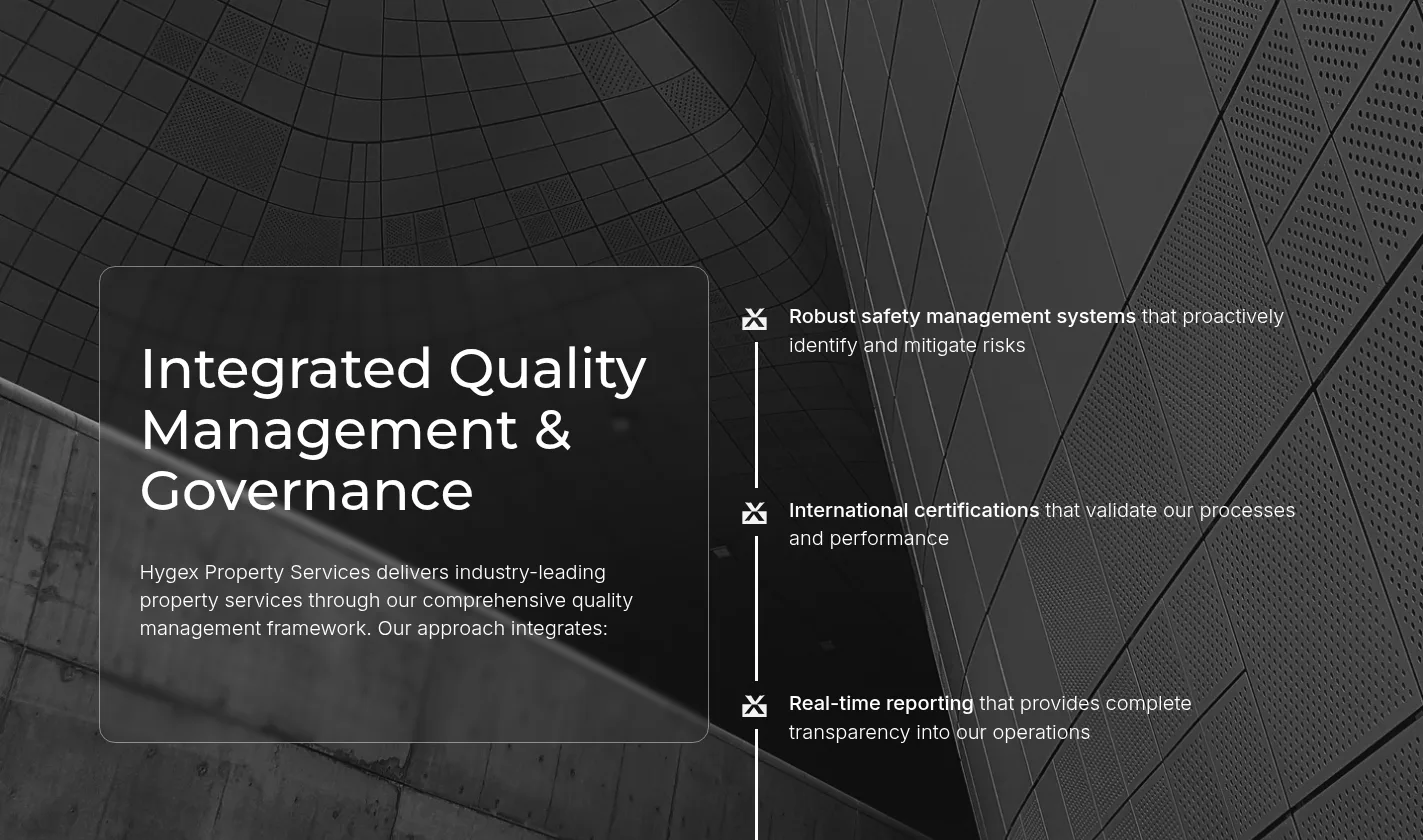
Governance as a selling page The quality management page is the one a facilities manager forwards internally: certifications, safety statistics, verified compliance and real time quality control, written so it can be pasted into a tender assessment.
03 — The outcome
A brand that competes on risk, not rate
Nine pages that qualify hard and disqualify quickly.
Enquiries come from organisations that have read the compliance and reporting detail, which is exactly the client the business was rebuilt to serve.
The maintenance division has its own front door, so an existing cleaning client can be sold a second service without a new website.
Ready for a website like this?
Let's build the next one together
Design, build, content and search, handled by one Auckland team.