
Selling multi-million dollar plants on evidence
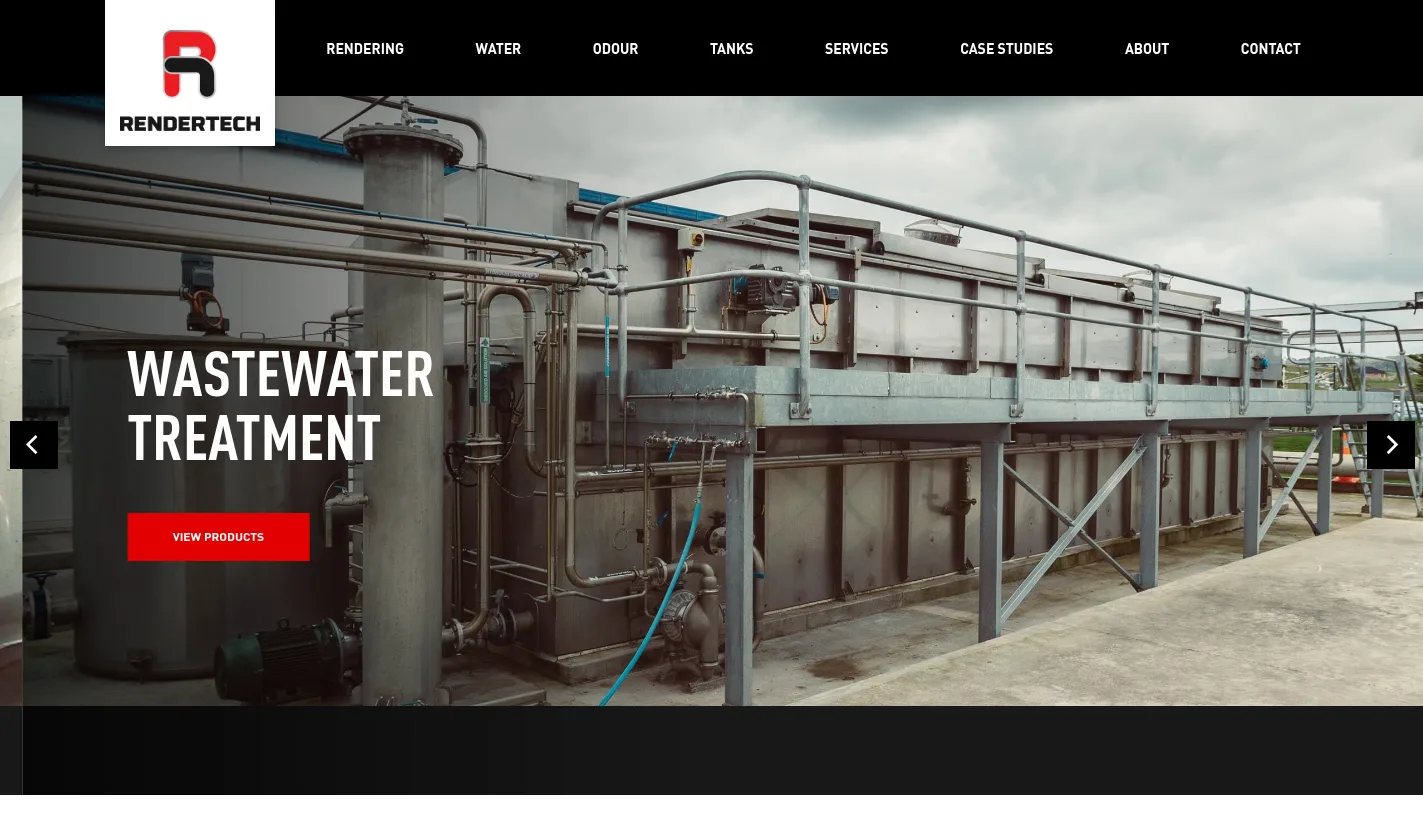
01 — The brief
A website for a purchase that takes two years
A rendering plant or a dissolved air flotation system is a capital project decided by process engineers, plant managers and boards, often over several years.
Nobody buys from a web page, but every one of those people researches from one. The site has to prove capability at a technical level, show comparable installations, and make it easy to reach the specific engineer who knows the answer.
The brief was a structure that carries four product streams, the equipment inside each one, and the project evidence behind them, without turning into a brochure that says nothing.
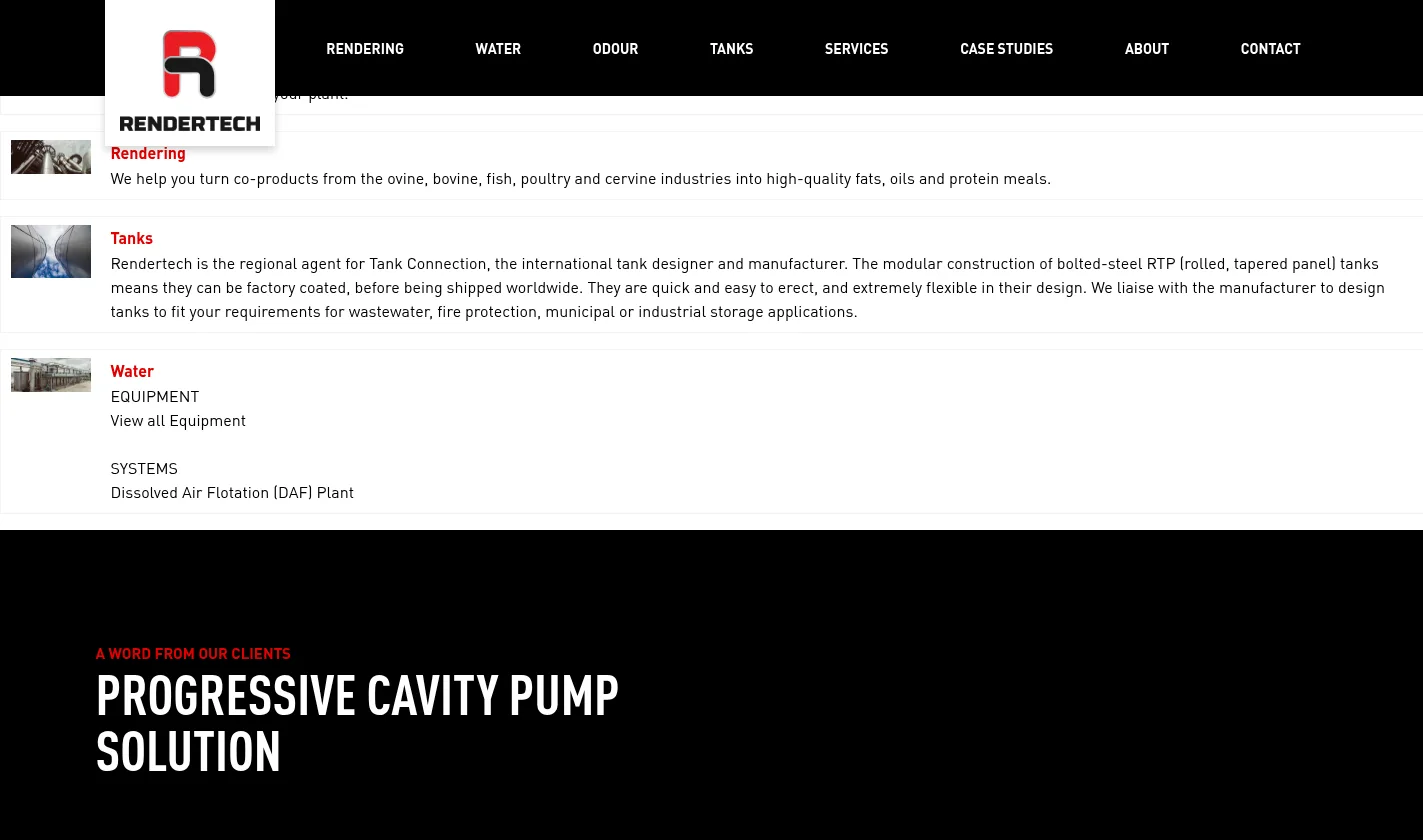
Four streams, one process partner Rendering and protein recovery, wastewater treatment, odour control and bolted storage tanks each get their own product stream, with the equipment and systems inside them documented individually.
By the numbers
Three decades of process engineering
Feature
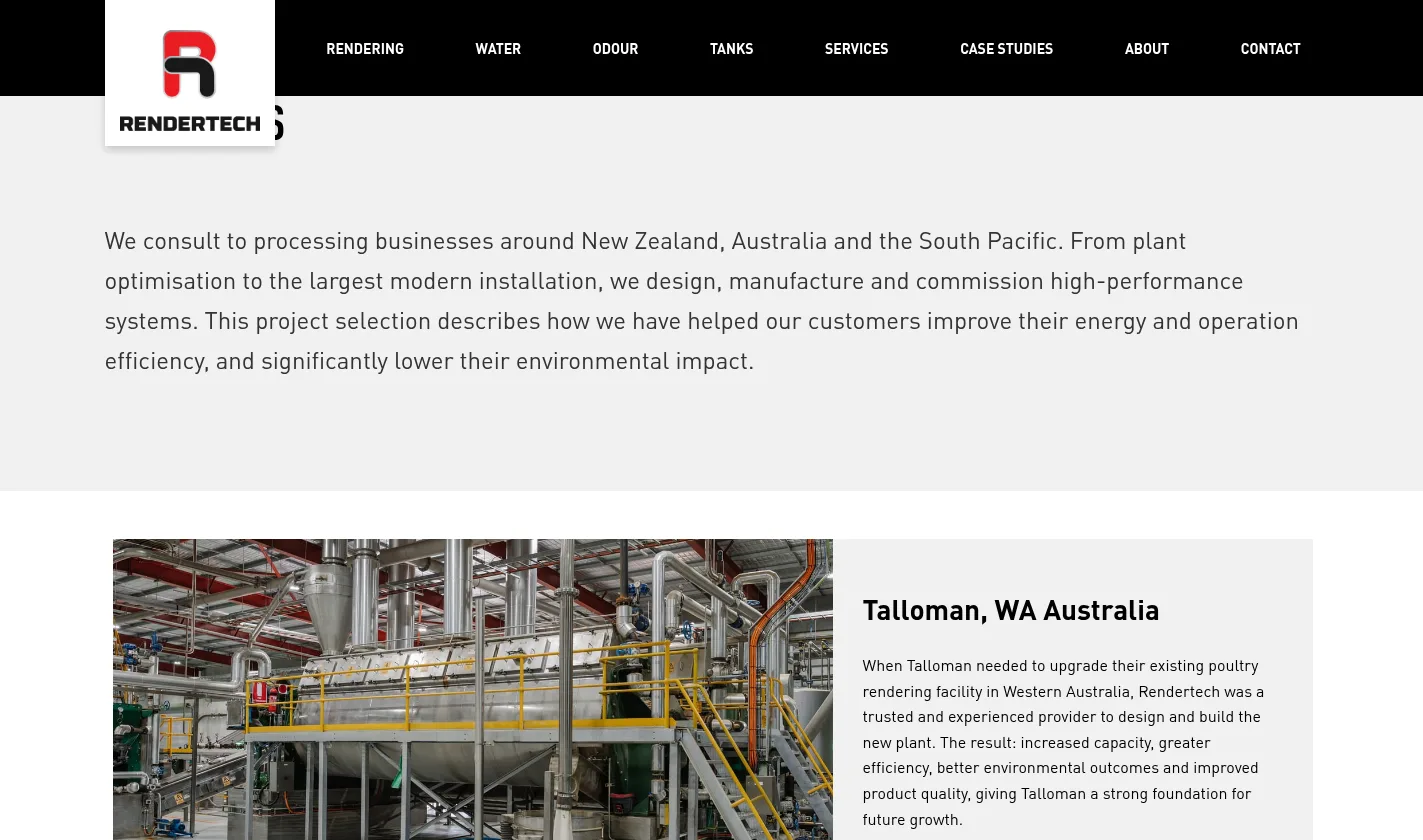
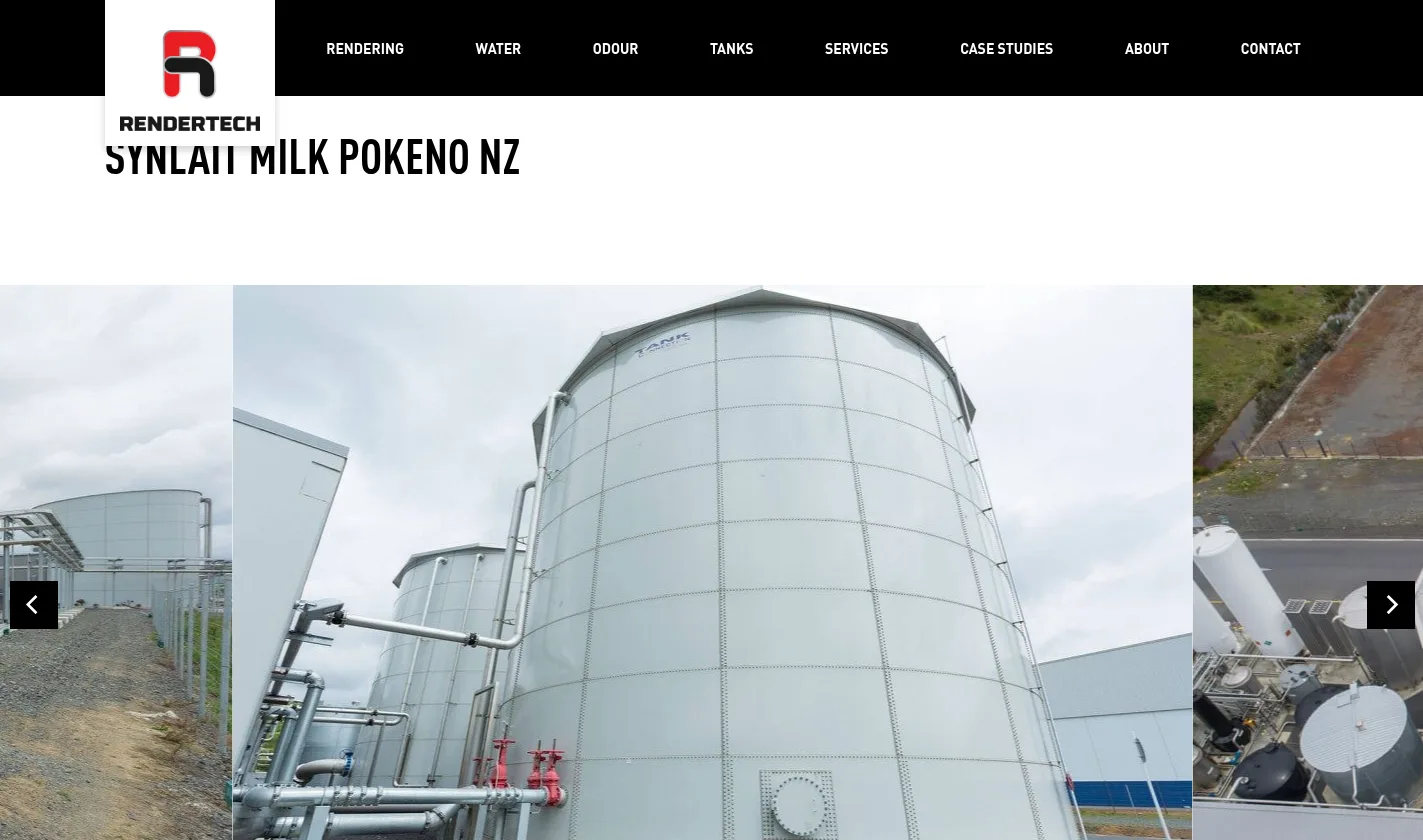
The case studies are the sales tool. Each one names the client and the site, describes the problem, the solution and the measurable outcome, from a poultry rendering upgrade in Western Australia to a ten thousand cubic metre potable water tank for a city council.
- Client named, site named, outcome stated
- Coverage across meat, dairy, fish and municipal work
- Client quotes attached to the relevant equipment
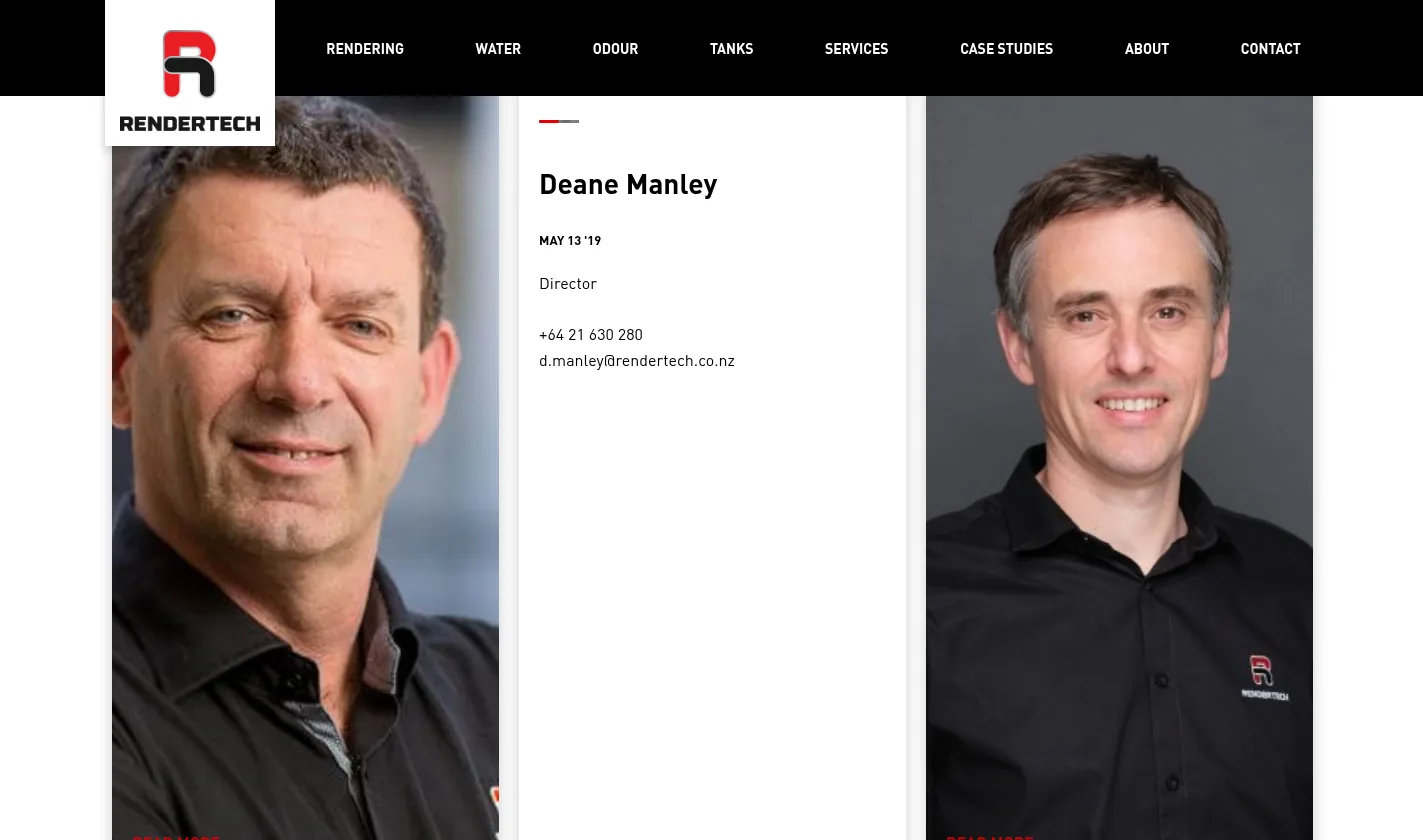
- Team profiles with direct mobile numbers
- Careers banner running site wide while hiring
- Enquiry paths on every product and system
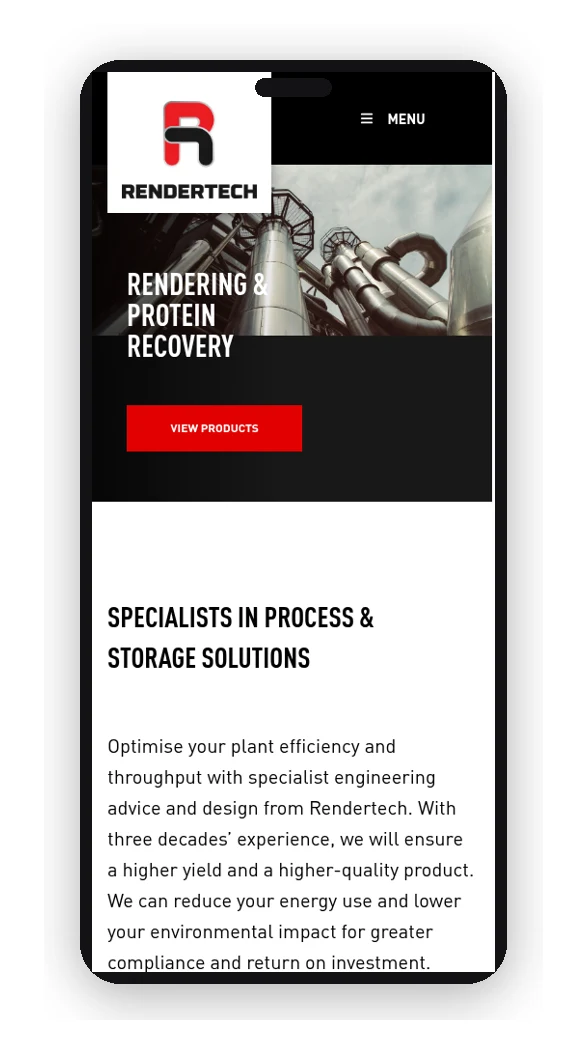
Technology as the differentiator
Low-temperature rendering, given its own argument
Rendertech's co-founder helped develop the first low-temperature rendering plants in New Zealand.
That technology roughly halves energy use against traditional high-temperature plants, improves output quality and cuts odour, and it is the reason the company describes itself as Australasia's only low-temperature rendering specialist.
The site gives it a dedicated section with the features and limits stated, because a claim that specific is what an engineer takes to their board.
02 — The process
How we got there
- 01
Structuring by process
The catalogue was built around the four process streams a customer already thinks in, with equipment and systems as records inside them.
- 02
Design for a technical reader
A clear, engineering-led interface where photography of real plant does the persuading and the copy stays specific.
- 03
Case study system
Projects were structured as records with client, location, problem and outcome, so the team can publish a new reference as each one completes.
- 04
Team and contact paths
Every team member has a profile with a direct mobile and email, because a capital enquiry should not go through a generic inbox.
- 05
Ongoing publishing
Blog posts, new case studies, client quotes and recruitment notices are all maintained in-house.
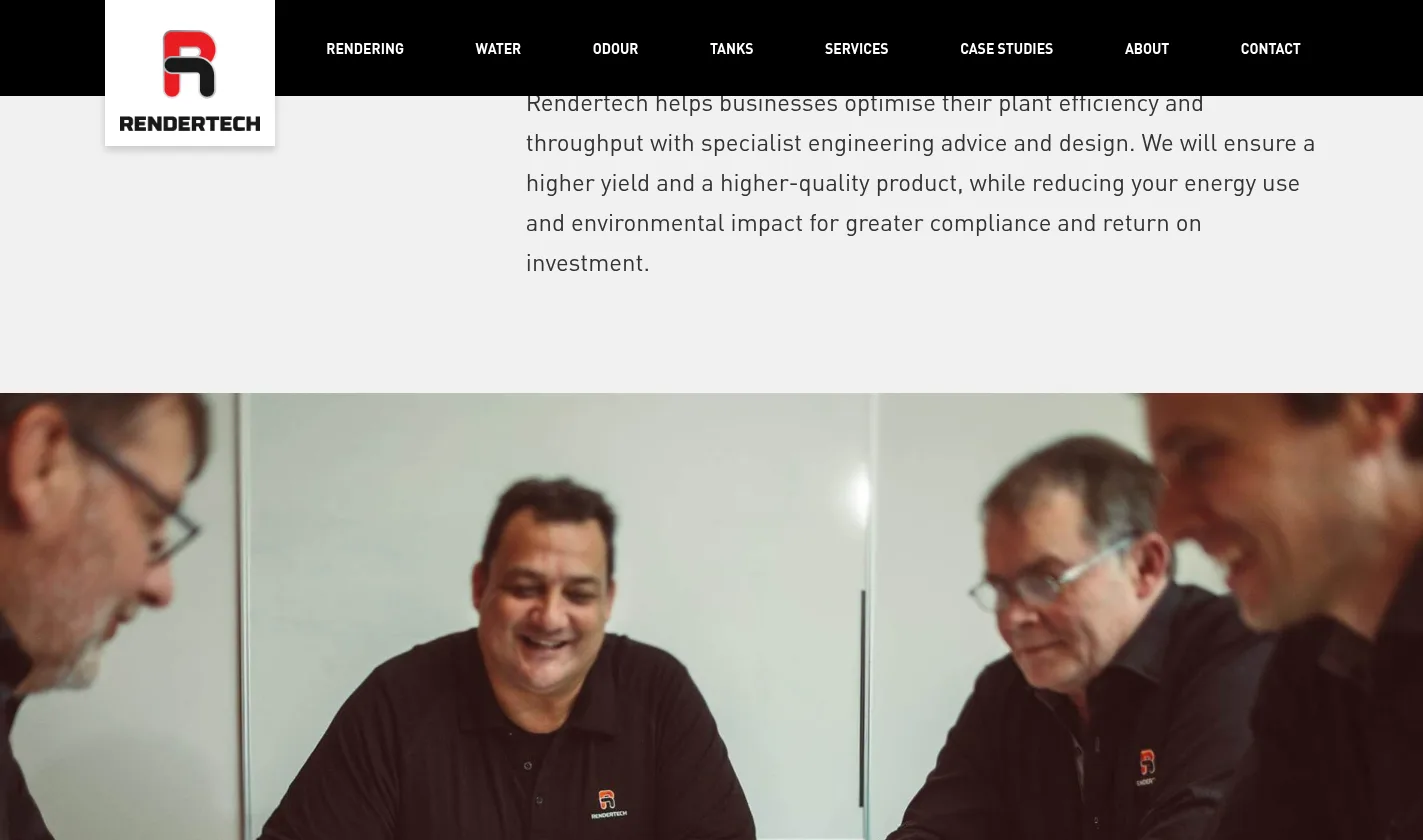
Capability, stated without hedging The about section covers design, manufacture, installation and support, the New Zealand manufacturing partnership, and the international markets served, which is the capability check a buyer runs first.
03 — The outcome
A reference list that does the selling
Engineers can qualify Rendertech technically, find a comparable installation and reach the right person, all before an enquiry.
Enquiries arrive from people who already know what they need and who they want to talk to about it.
The case study and blog systems mean each completed project turns into published evidence for the next one.
Ready for a website like this?
Let's build the next one together
Design, build, content and search, handled by one Auckland team.