
The complaints system behind New Zealand's media
01 — The brief
Make a formal complaints process usable by anyone
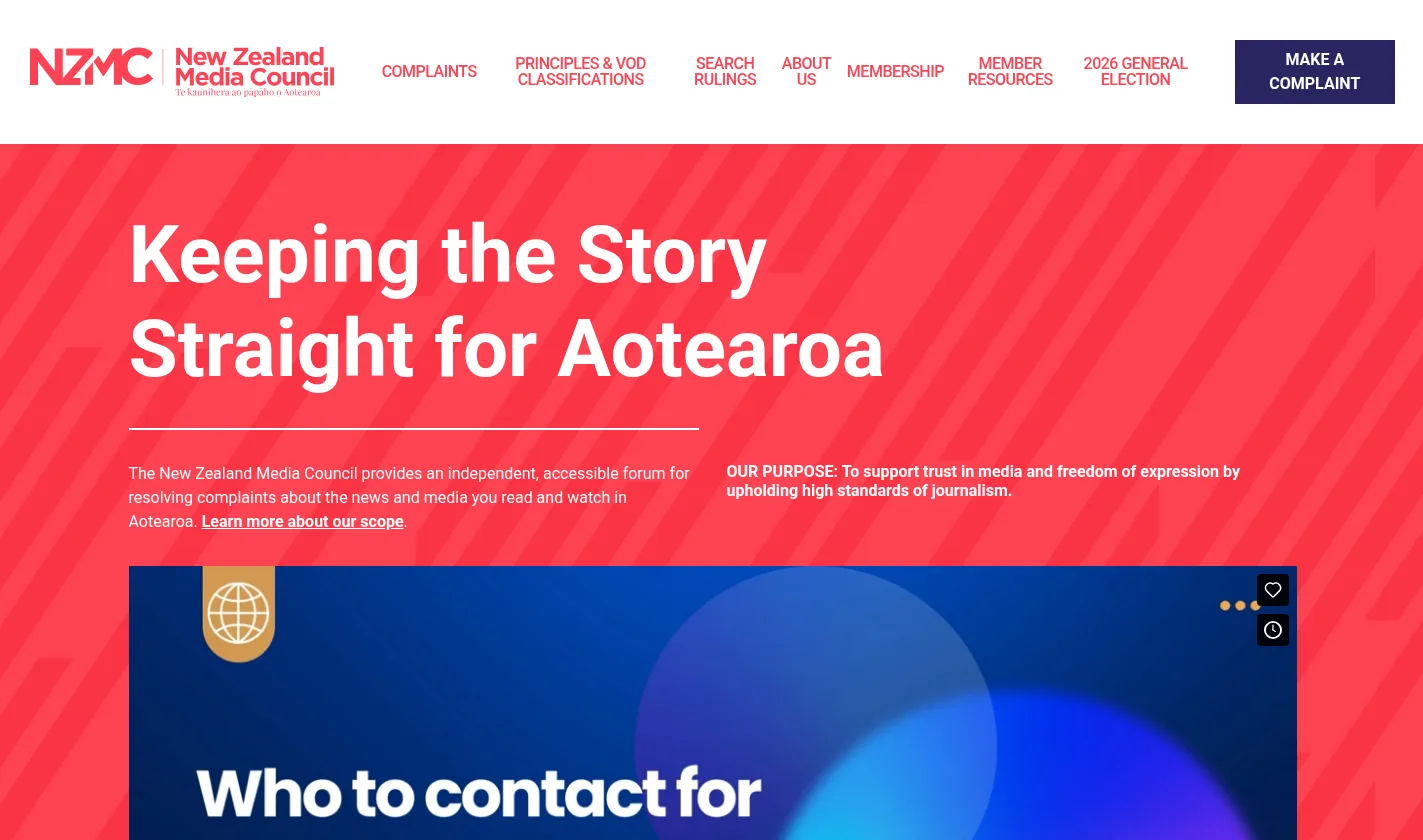
The Media Council is a self regulatory body, established in 1972, that gives the public a free and independent way to complain about editorial content. Its members are effectively every significant publisher in the country.
A complaint has rules. It must go to the publisher first, within a calendar month. The complainant then has twenty working days to come to the Council, must sign a waiver, and must tie the complaint to one or more of the Council's principles. Explaining that in a PDF loses people with legitimate complaints.
The Council also has to publish its work. Every ruling is a public document, and the archive is the main reason journalists, lawyers, students and publishers use the site at all.
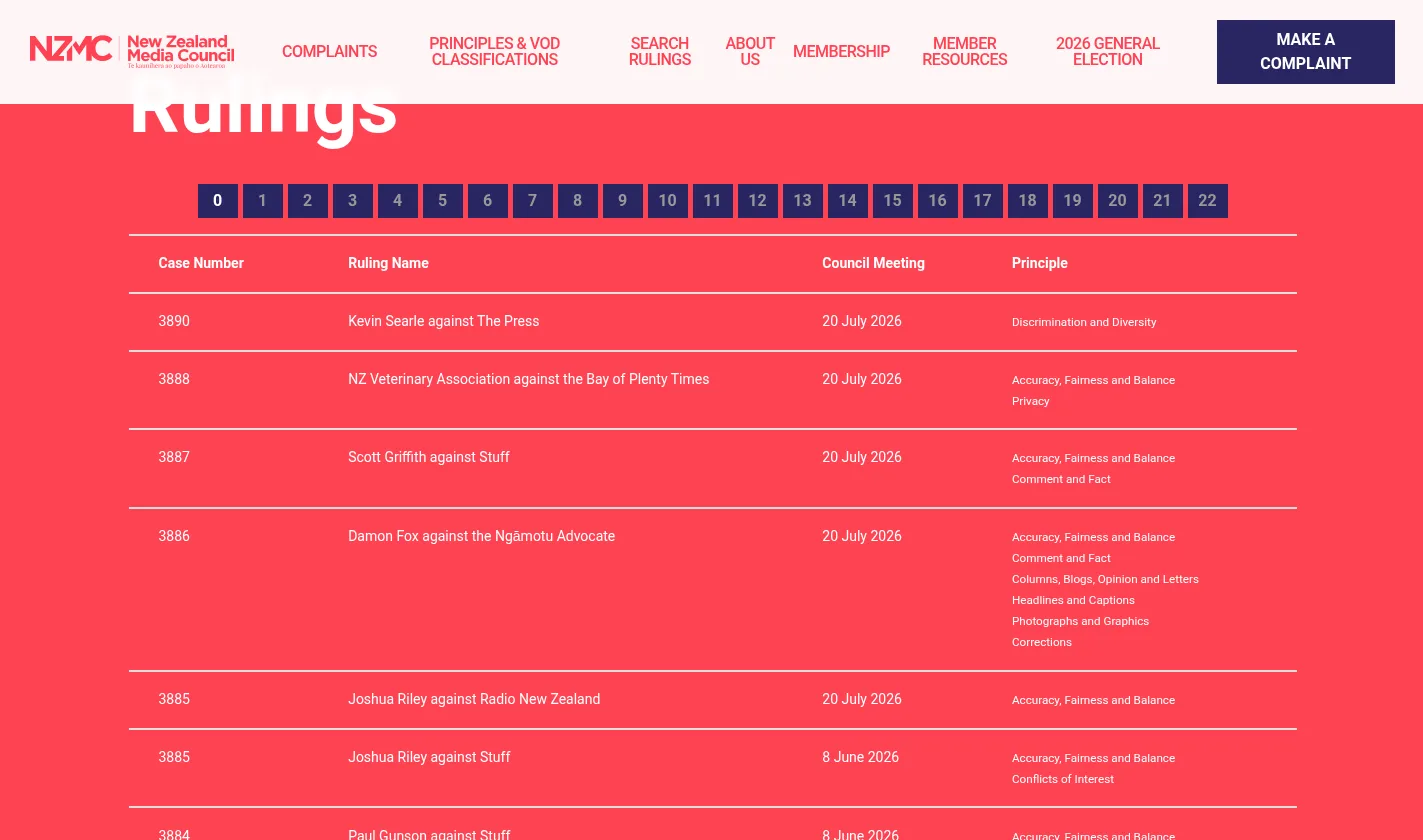
Every ruling, searchable More than 2,300 rulings are published with case number, publication, meeting date and the principles involved, so a journalist or a lawyer can find precedent in a minute instead of an afternoon.
By the numbers
A public record, and a working process
Feature
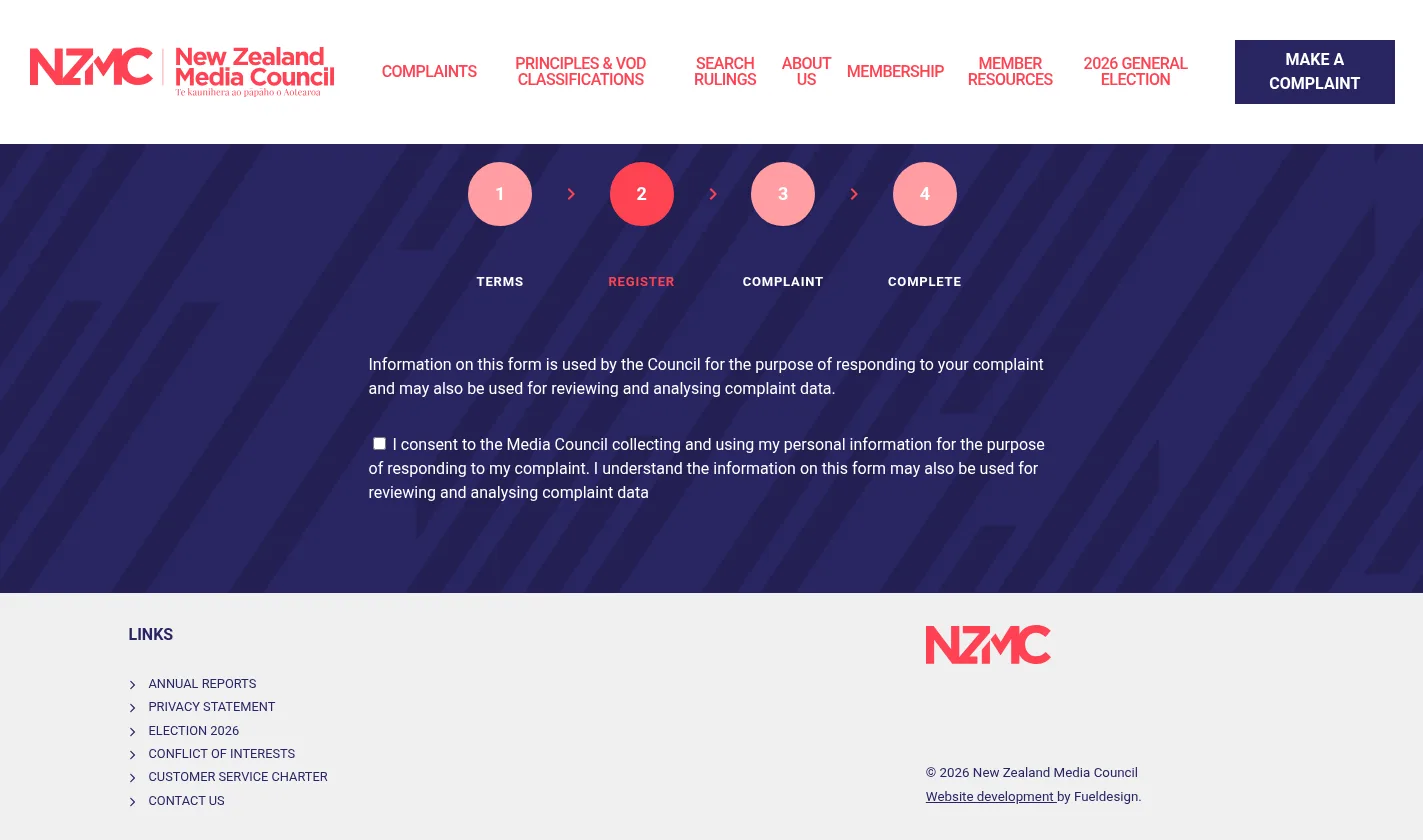
The complaint form is a four step process that will not let a complainant skip a requirement: terms and consent, their details, the complaint itself, then confirmation. It is the part of the site that does the Council's work.
- Four step guided intake with consent captured in writing
- A separate path for video on demand complaints
- Article details, the publisher's response and the principles selected in the form
- Time limits and waiver requirements explained before the form starts
- Complaints land in the Council's system rather than an inbox
- Complaint data available to the Council for review and analysis
Members and resources
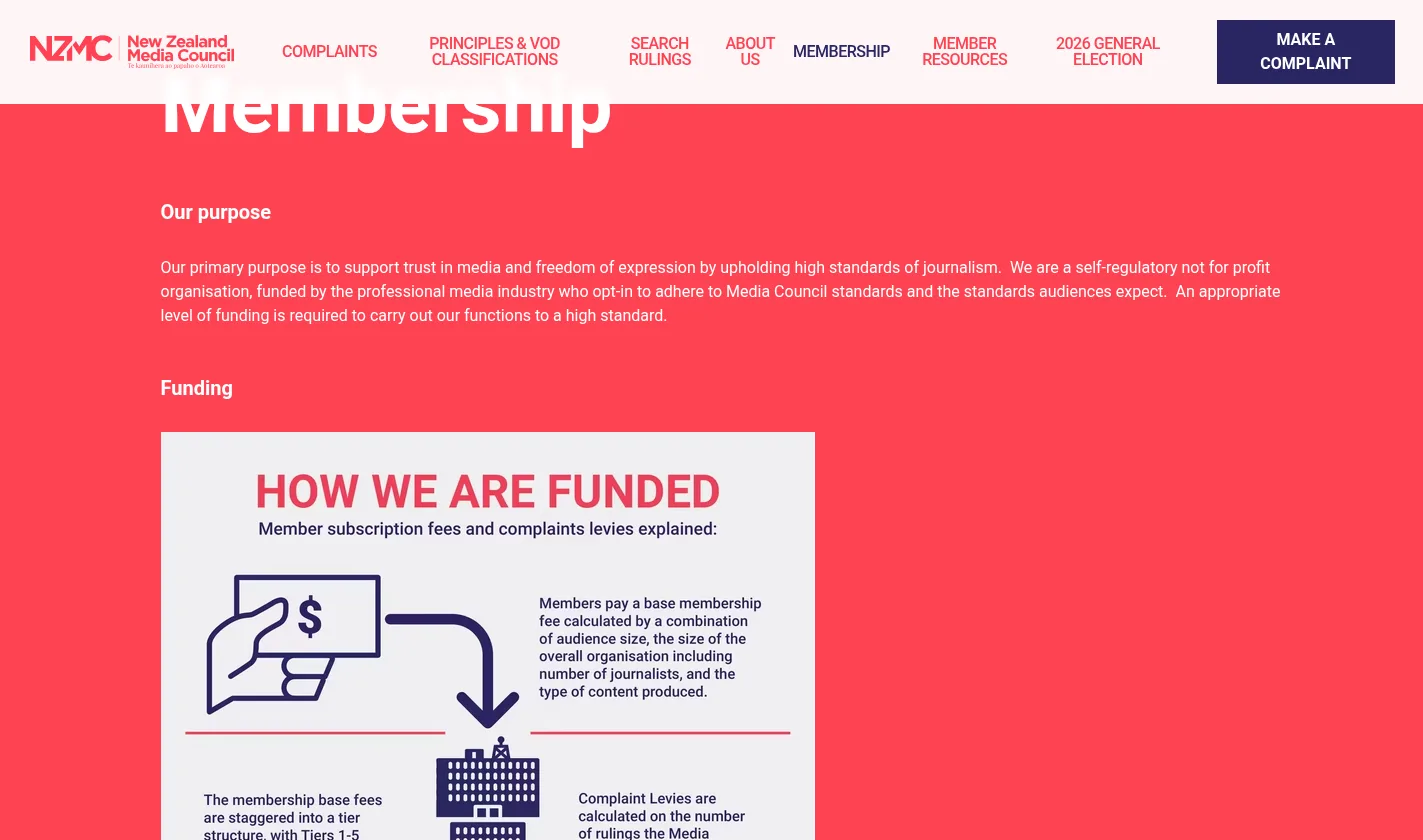
A member area on top of a public service
The site serves the public, the publishers who fund the Council, and the Council itself.
Members have their own resources area, membership applications run through the site, and Council elections are administered from it, while annual reports and news stay public.
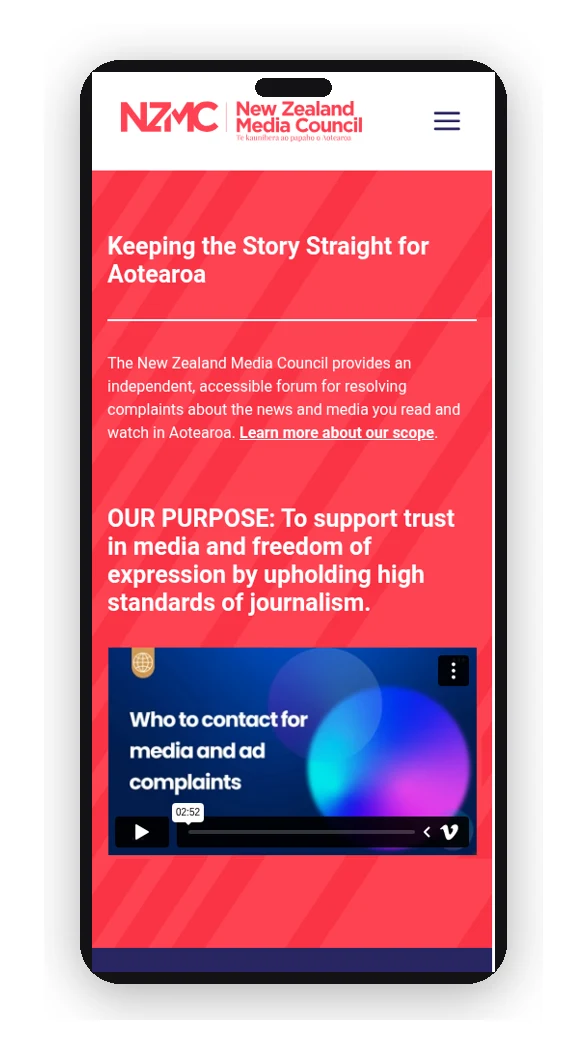
One platform therefore holds three audiences: complainants who need a clear process, publishers who need reference material, and researchers who need the archive.
02 — The process
How we got there
- 01
Mapping the complaints process
The Council's procedure, time limits and waiver requirements were mapped step by step before anything was built, because the form has to enforce them.
- 02
Building the intake system
A four step complaint wizard with consent, article details, publisher response and principle selection, writing into the Council's own records.
- 03
Publishing the rulings archive
Every ruling structured with case number, publication, meeting date and principles, which is what makes 2,300 documents searchable rather than archived.
- 04
Member and Council functions
Membership applications, a member resources area, elections, annual reports and the Video On Demand Classifications Code.
- 05
The 2026 redesign
A full redesign of the public site, keeping the complaint system and the archive intact underneath it.
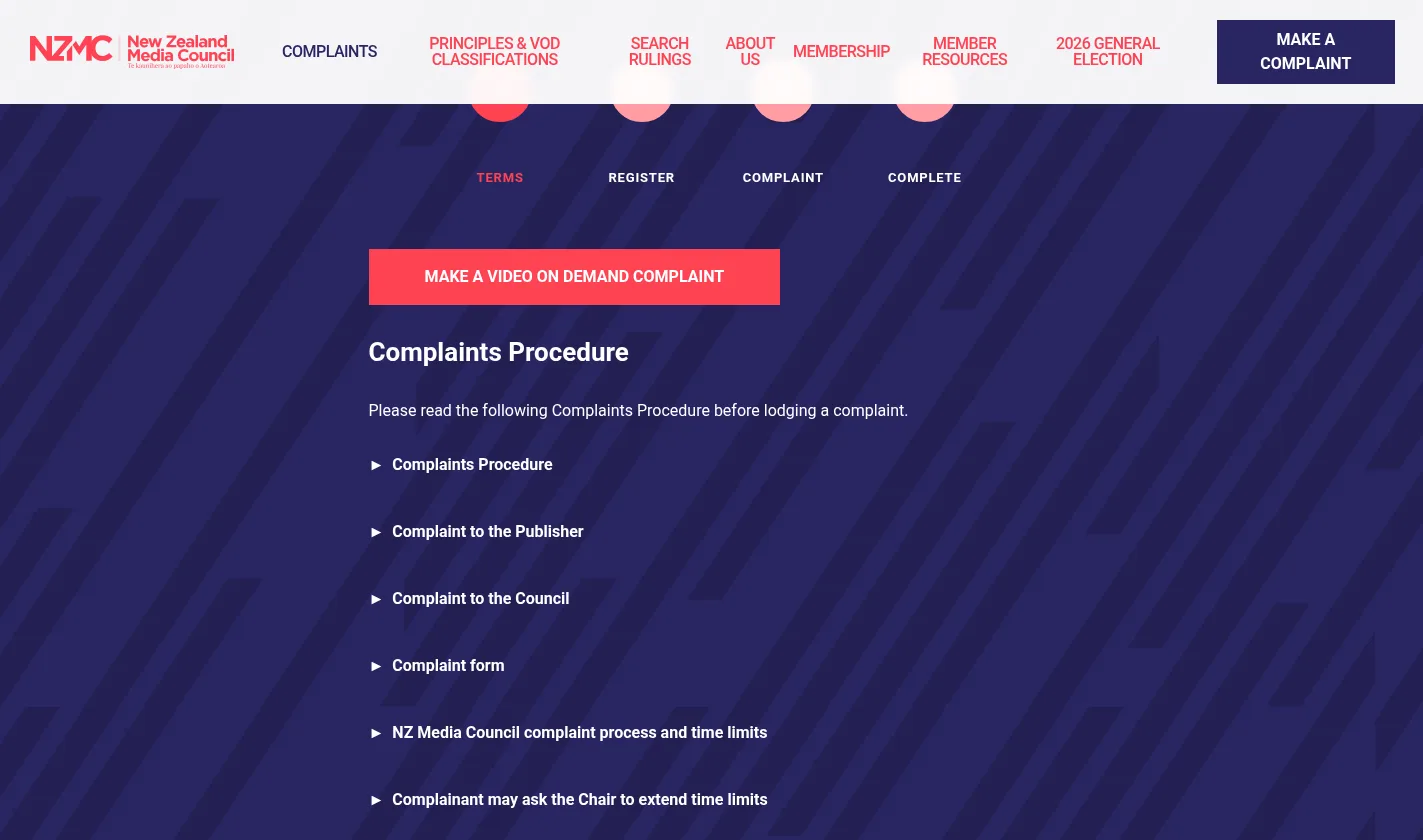
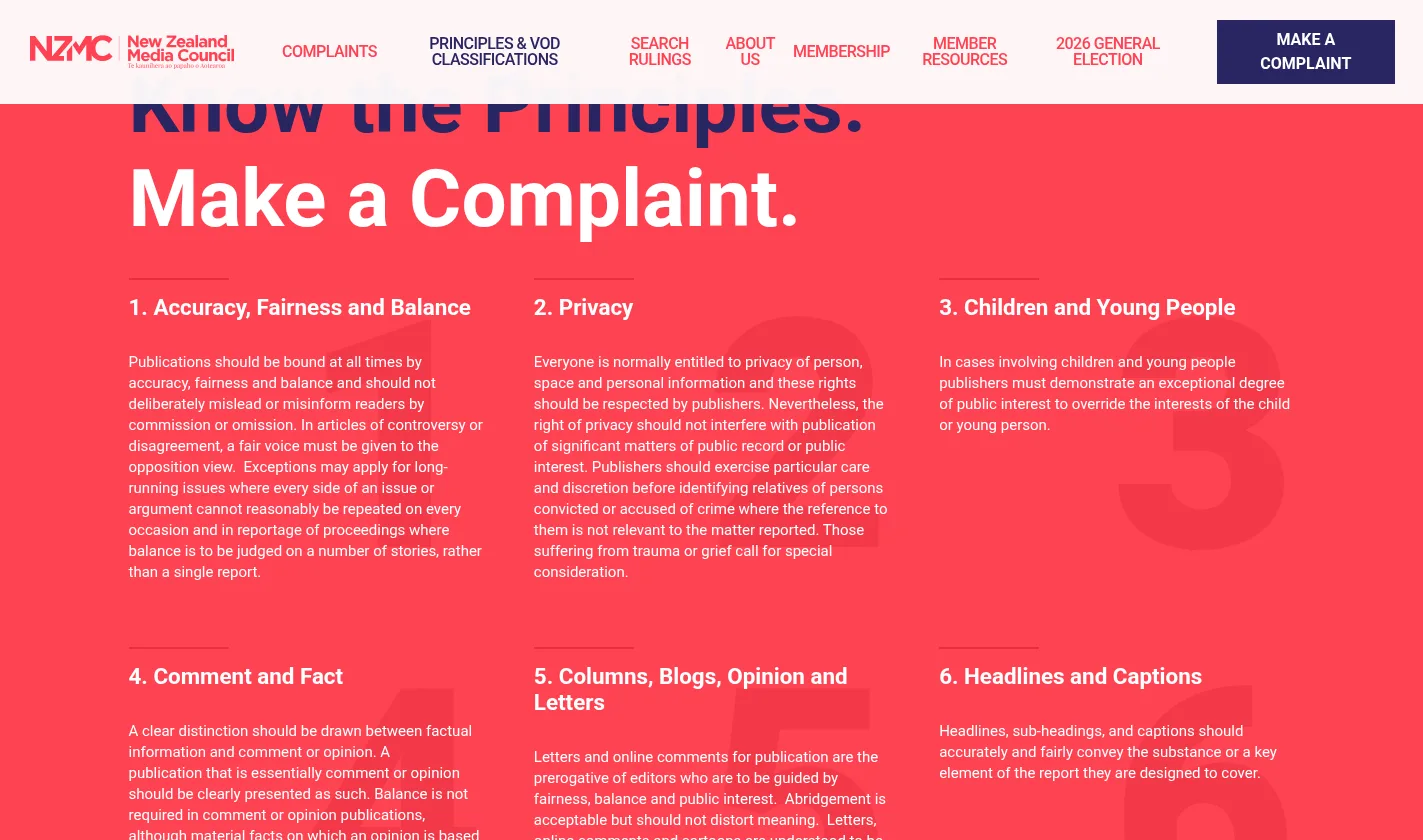
The rules, before the form The procedure is set out in plain language first: complain to the publisher, wait ten working days, then come to the Council within twenty. Complainants arrive at the form already eligible, which saves the Council from rejecting them later.
03 — The outcome
A regulator that runs on its website
Complaints arrive complete and eligible, and every decision is published where the industry can find it.
The site is the Council's front counter, its filing system and its public record at the same time, which for a small not for profit is the difference between coping and drowning.
The 2026 redesign modernised the whole thing without disturbing the complaint system or the archive that sits behind it.
Ready for a website like this?
Let's build the next one together
Design, build, content and search, handled by one Auckland team.