
Sixty years of driveline engineering, made findable in three clicks
01 — The brief
A catalogue that outgrew its website
Beattys has manufactured driveshafts in Auckland since 1963. Three generations on, they supply six industries and carry the largest stocked range of universal joints in New Zealand.
That depth was the problem. The old site asked a marine engineer and a fleet workshop manager to wade through the same undifferentiated product list. Specifications lived in PDFs. Turret, Beattys' own componentry brand since 1997, was buried three levels down with no way to browse it as a range.
The brief was not to make it look modern. It was to let a specialist find the exact part they need without phoning the office.
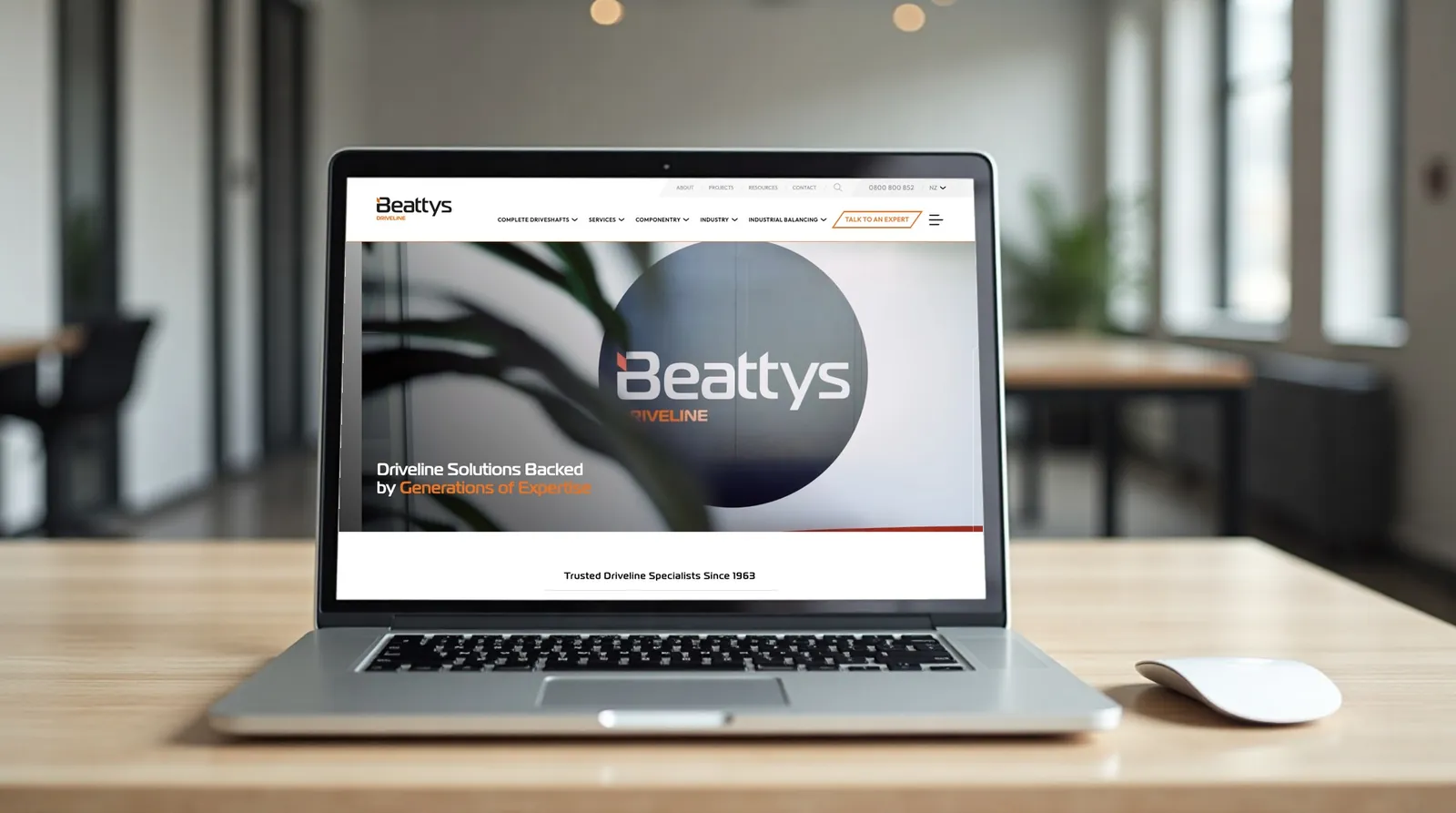
Navigation built around the job Five top-level categories open into full product trees, so a marine engineer never sees agricultural stock, and "Talk to an expert" sits permanently in the header.
By the numbers
Depth, made navigable
Feature
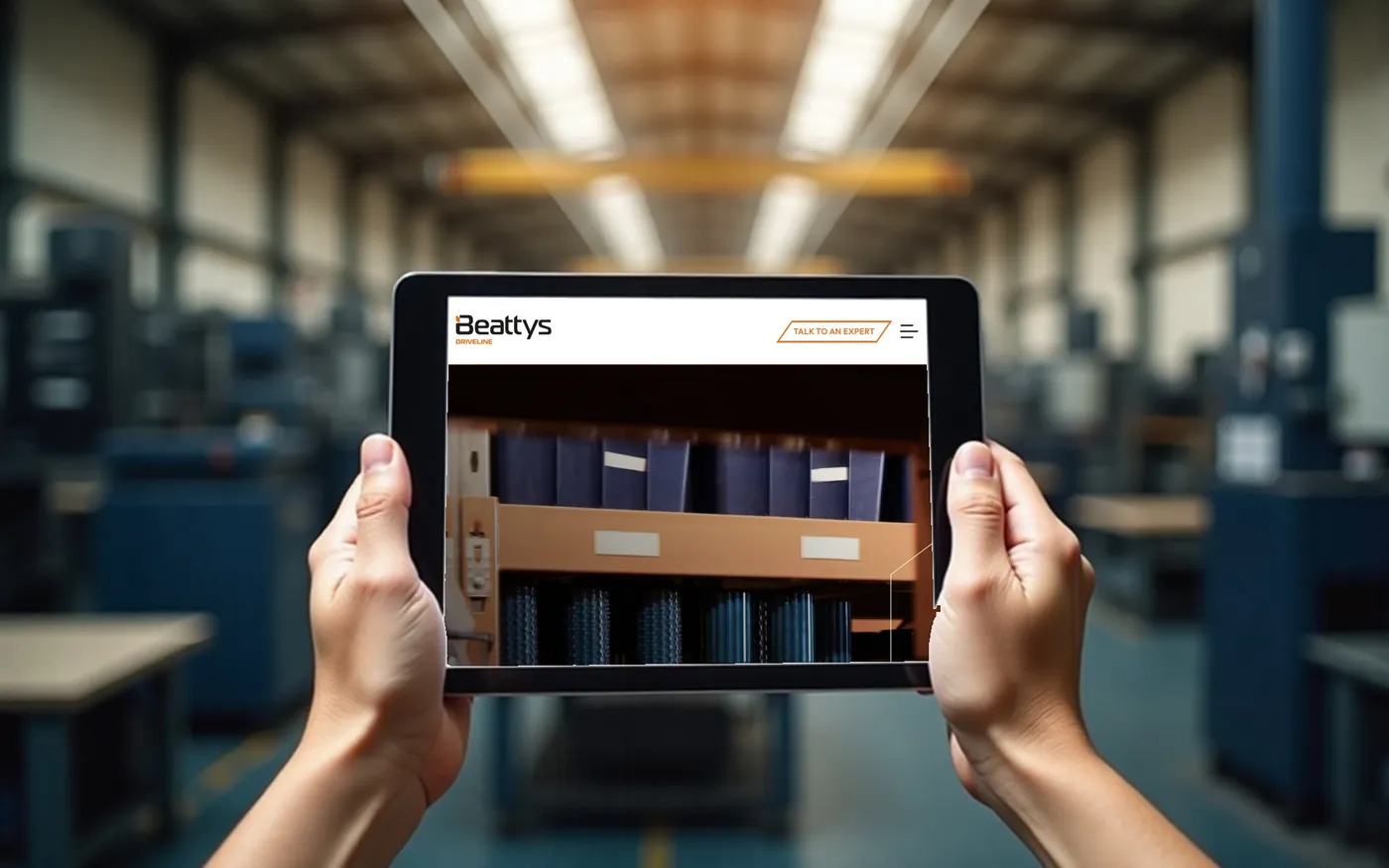
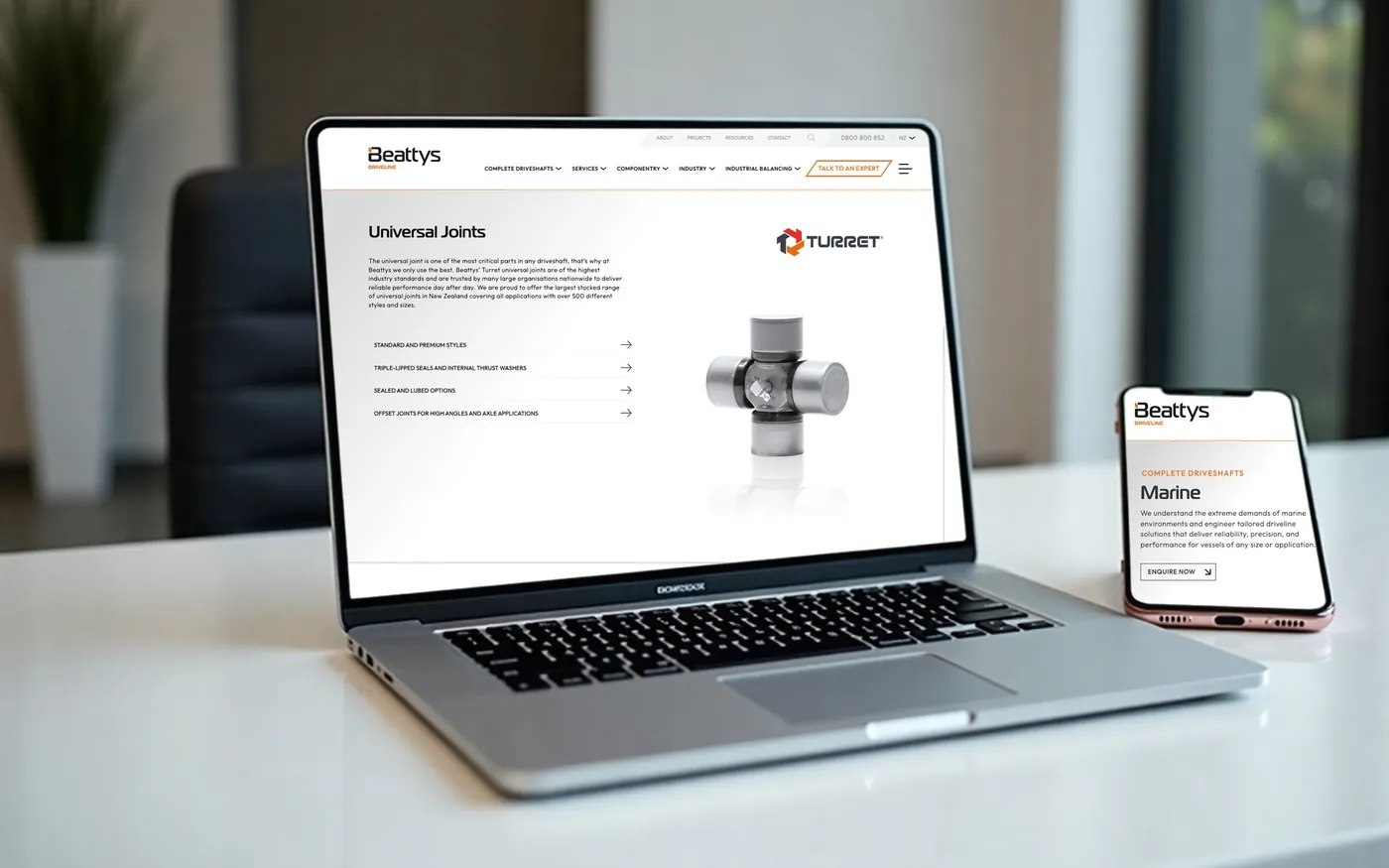
Buyers research at a desk and verify on a phone, often standing beside the machine. Every template holds up at both ends, and specifications are structured content rather than PDF downloads.
- Specs as indexable pages
- Series cards subdivide large ranges
- Region switcher for NZ, AU and Global

One build, three markets
Three websites, one database, one CMS
Beattys supply New Zealand, Australia and the rest of the world, and each market needs its own domain, its own contact details and its own product mix. Rather than three builds to keep in step, all three run from a single Oncord install on one product database. Content is entered once and published everywhere, then overridden per country where a market differs, so a category Beattys do not supply offshore simply does not appear on the offshore sites.
The home market and the full stocked range, with local pricing context and enquiries landing at Wiri.
The same catalogue with Australian contact details and market specific content.
Export facing, with categories Beattys do not supply offshore hidden from view.
- One product database behind all three sites
- One CMS login, one place to publish
- Per country rules on which categories and content appear
02 — The process
How we got there
- 01
Discovery on the workshop floor
We started at Wiri, not in a boardroom. Watching staff answer phone enquiries told us customers describe what they need by application and vehicle, rarely by part number.
- 02
Restructuring the catalogue
We card-sorted the full range into four tiers so the same product is reachable by what it is and by what it is for. Two mental models, one content set.
- 03
Design system and brand carry-through
A component library of cards, spec rows and industry tiles, plus a distinct visual treatment for Turret so the house brand reads as a product line rather than a footnote.
- 04
Build and migration
Every legacy page was mapped and redirected before launch. Specifications came out of PDFs and into structured, searchable content.
- 05
Launch and handover
Regional switching went live with the site, and the Beattys team was trained to add products themselves with no agency dependency.
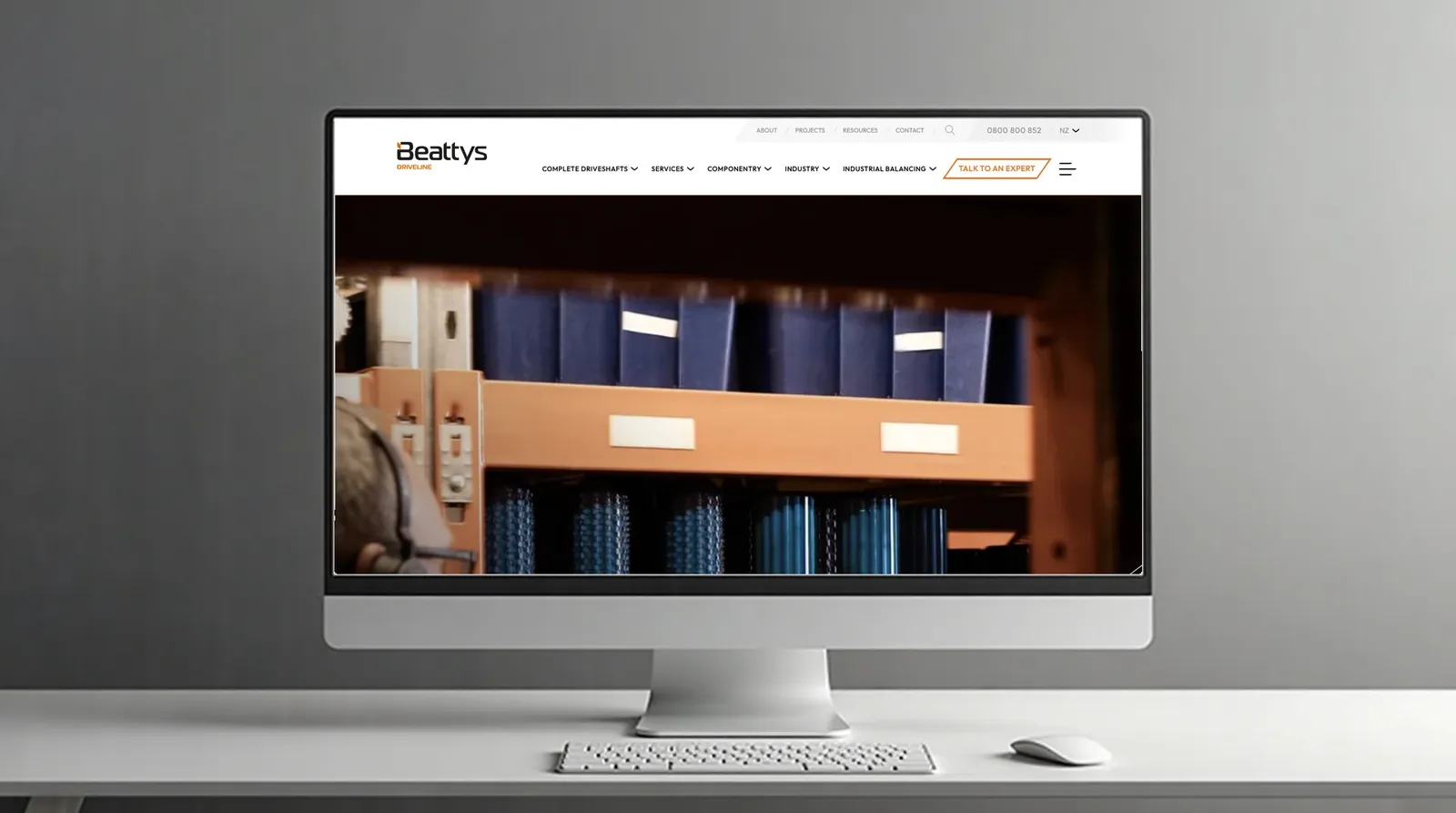
Four levels, no dead ends The componentry tree runs four levels deep across 30+ product pages. Every one is a real, indexable page, so the sales team sends URLs instead of PDF attachments.
03 — The outcome
A manufacturer that looks like one
Eighty-plus pages of technical content, organised so that depth reads as authority rather than clutter.
The catalogue is fully indexable for the first time. Every specification is a real page that can rank, be linked from a quote, or be pulled up on a phone beside a vehicle.
Sixty years of heritage is stated plainly and early: a timeline from D'Arcy Brodie's 1963 engineering shop to a third-generation family business exporting globally. It is the strongest trust signal they have, and the old site hid it.
Ready for a website like this?
Let's build the next one together
Design, build, content and search, handled by one Auckland team.