

From an idea about feelings to two app stores
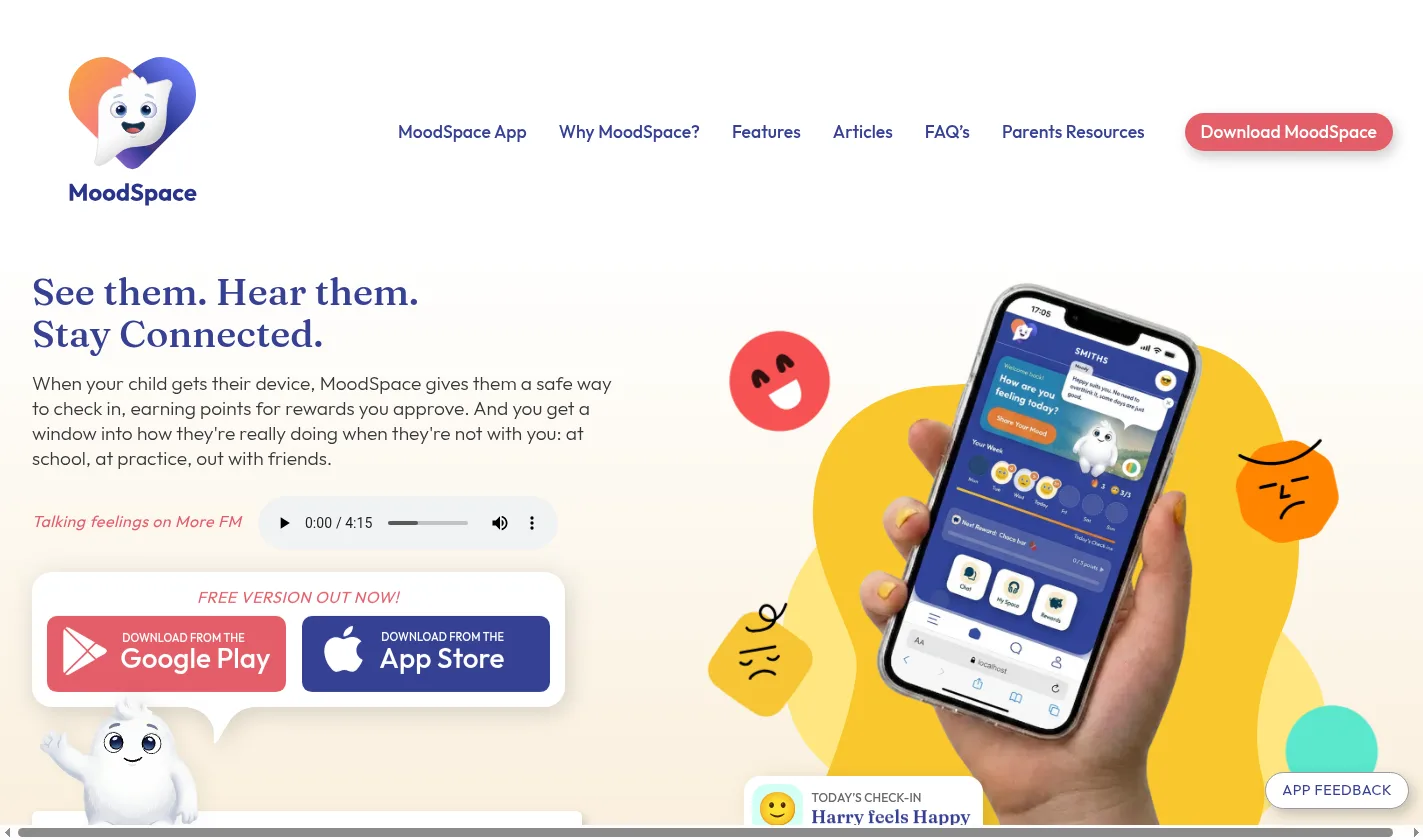
01 — The brief
Build the thing an early childhood teacher kept wishing existed
Rochanna started working in childcare centres at fourteen and spent years in early learning classrooms and leadership. She kept seeing the same thing: families who love each other, quietly losing the daily check-in to busy schedules and screens.
The moment a child gets their first phone is the moment the habits get set. MoodSpace had to land there: an app a child will actually open every day, a window for a parent that supports rather than surveils, and a brand warm enough that neither side feels managed.
There was no product, no name in the market and no brand. Fuel was brought in for all of it: identity, the app itself on both platforms, the website that has to explain a feelings app to a sceptical parent in thirty seconds, and the campaign that gets it seen.
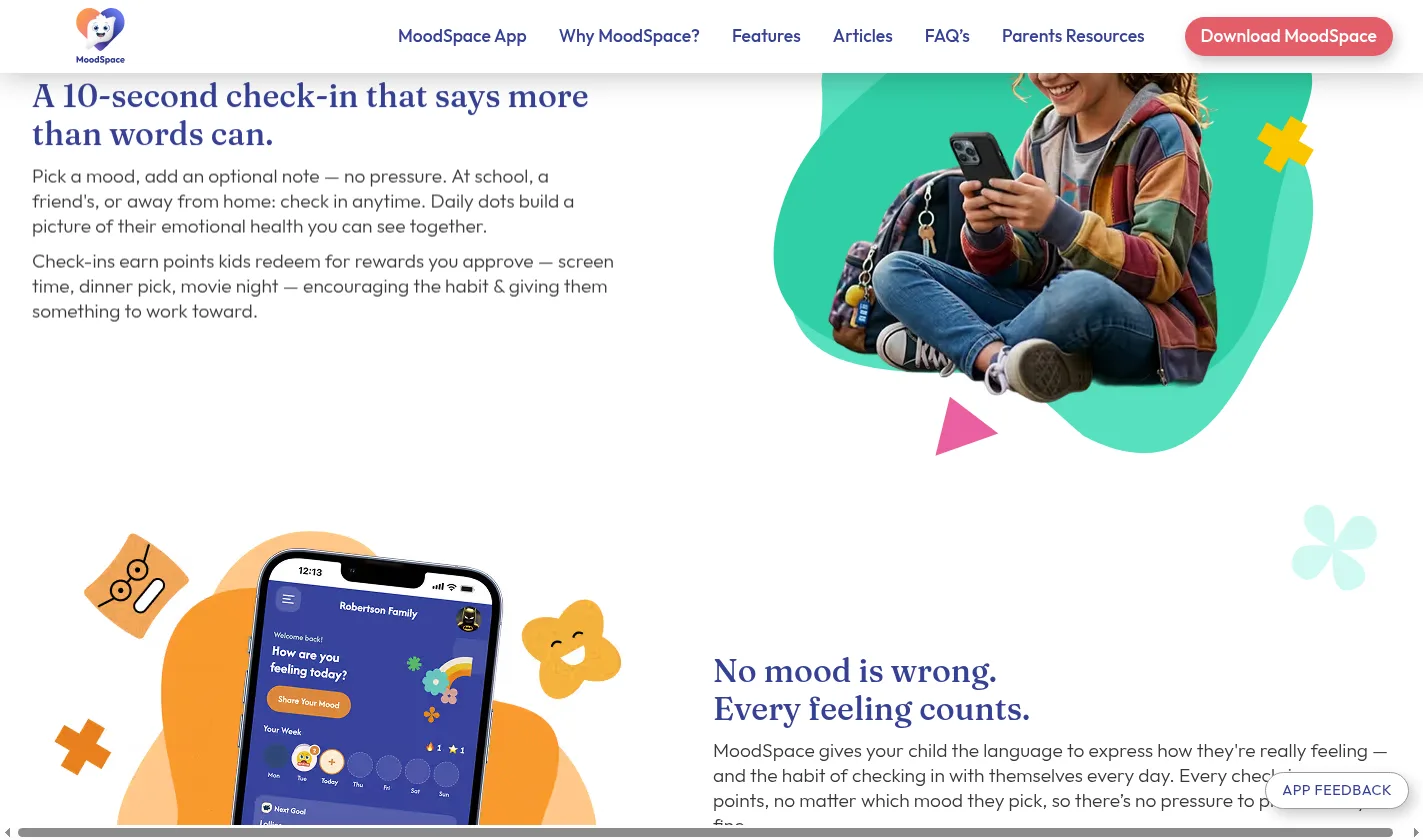
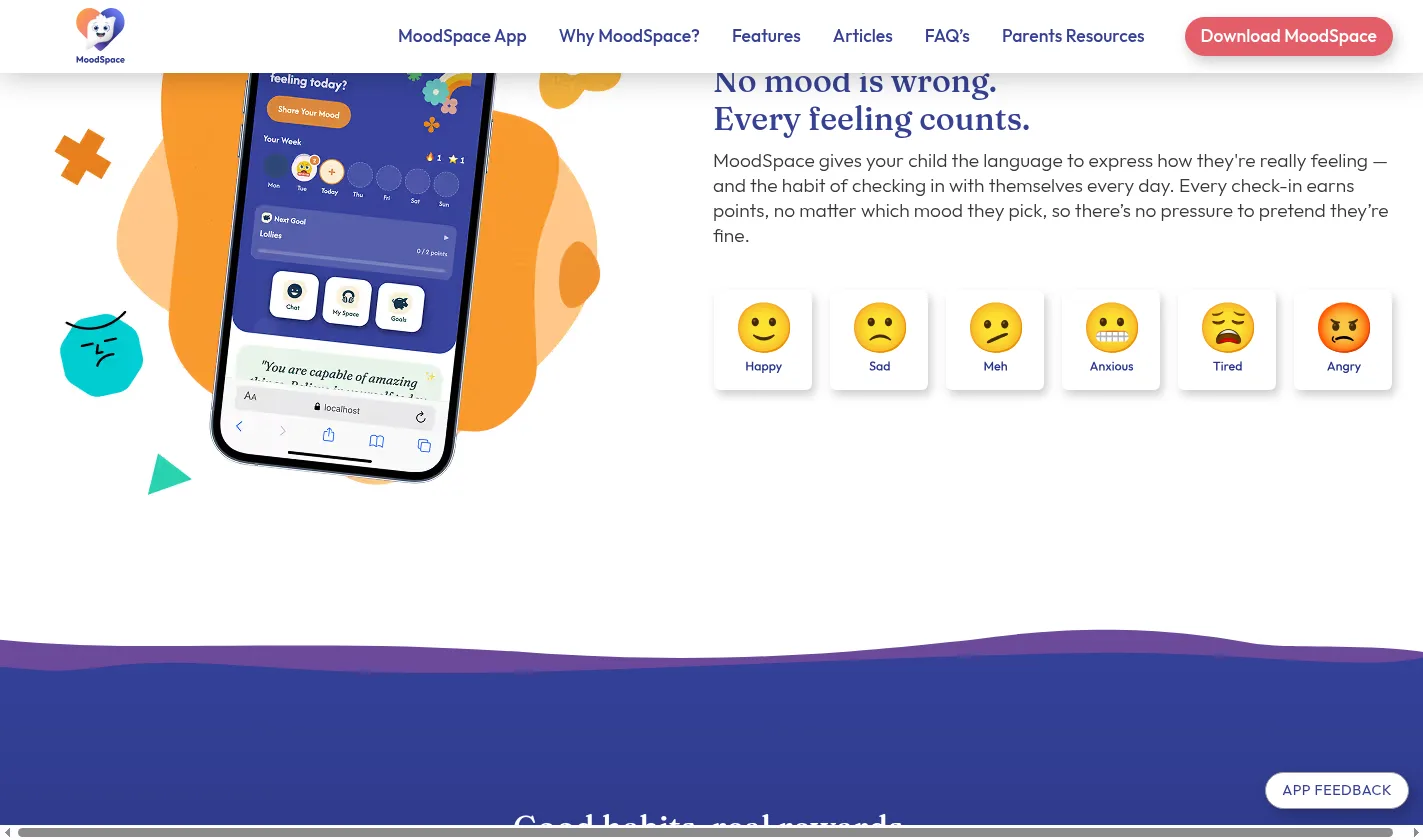
Ten seconds, not an interview The whole product hangs off one small habit: pick a mood, set how strongly you feel it, add a note only if you want to. Everything else in the app exists to make that ten seconds worth repeating tomorrow.
By the numbers
A full product, not a prototype
Feature
Children do not fill in wellbeing forms. So the check-in is six friendly moods, a strength dial and an optional note, wrapped in the things that make a habit stick: a streak, a companion who notices, points that turn into rewards a parent has approved.
- Six moods, an intensity setting and an optional note
- Streaks, badges and a points economy that only ever adds
- Rewards a parent sets and approves, from movie night up
- A private journal only the child can read
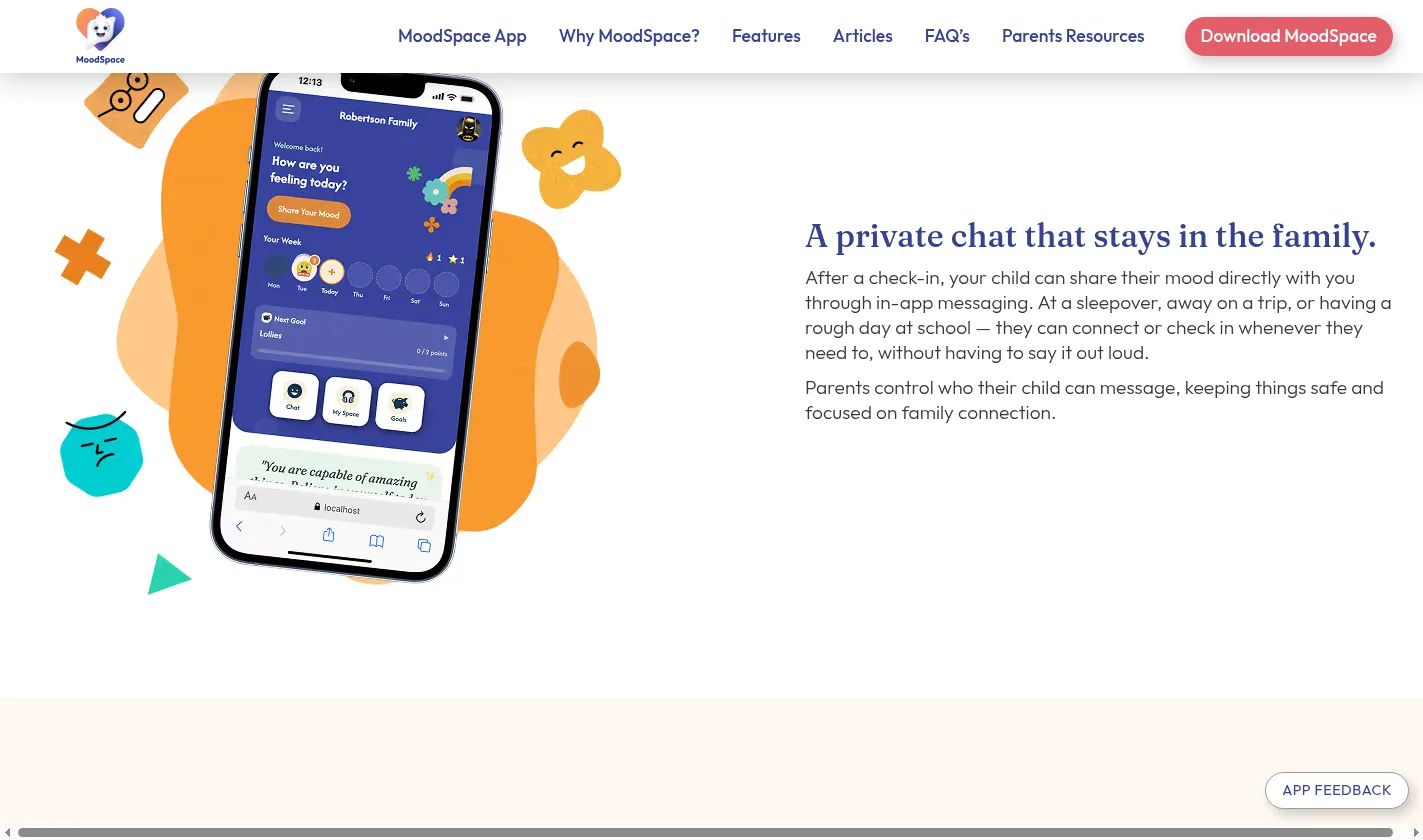
- End-to-end encrypted parent, child and family chat
- Calm Corner breathing and grounding for the hard moments
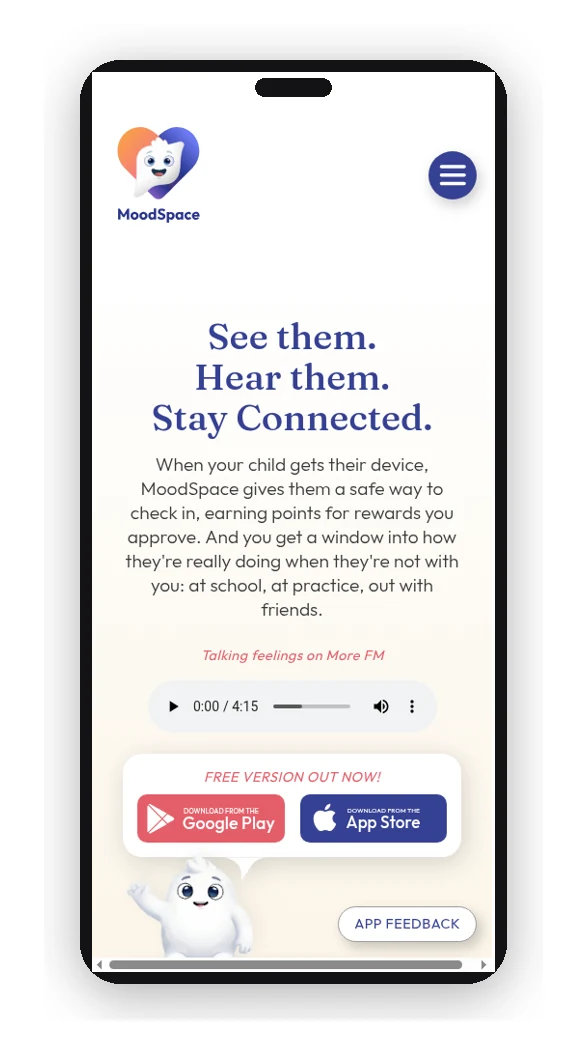
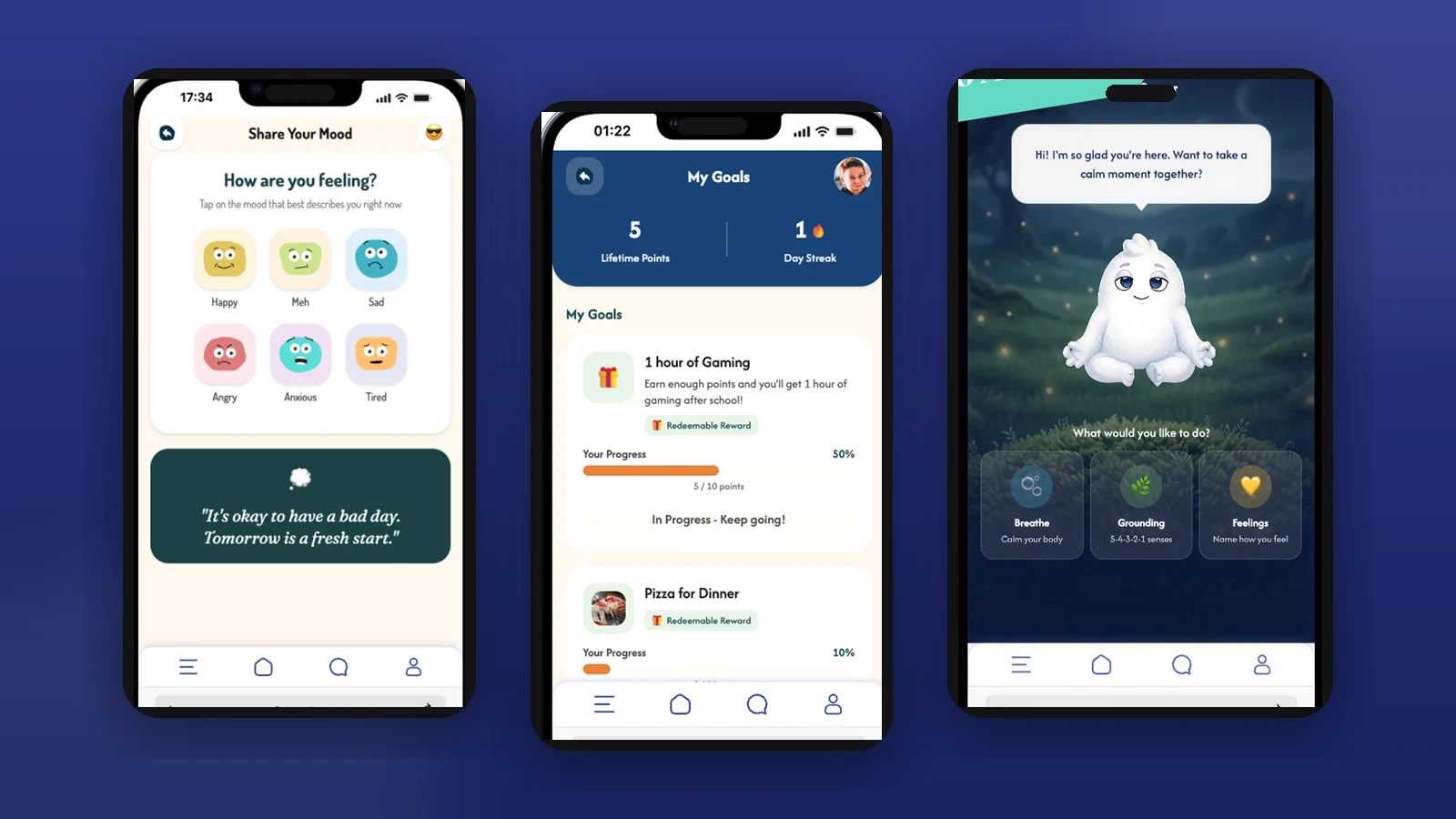
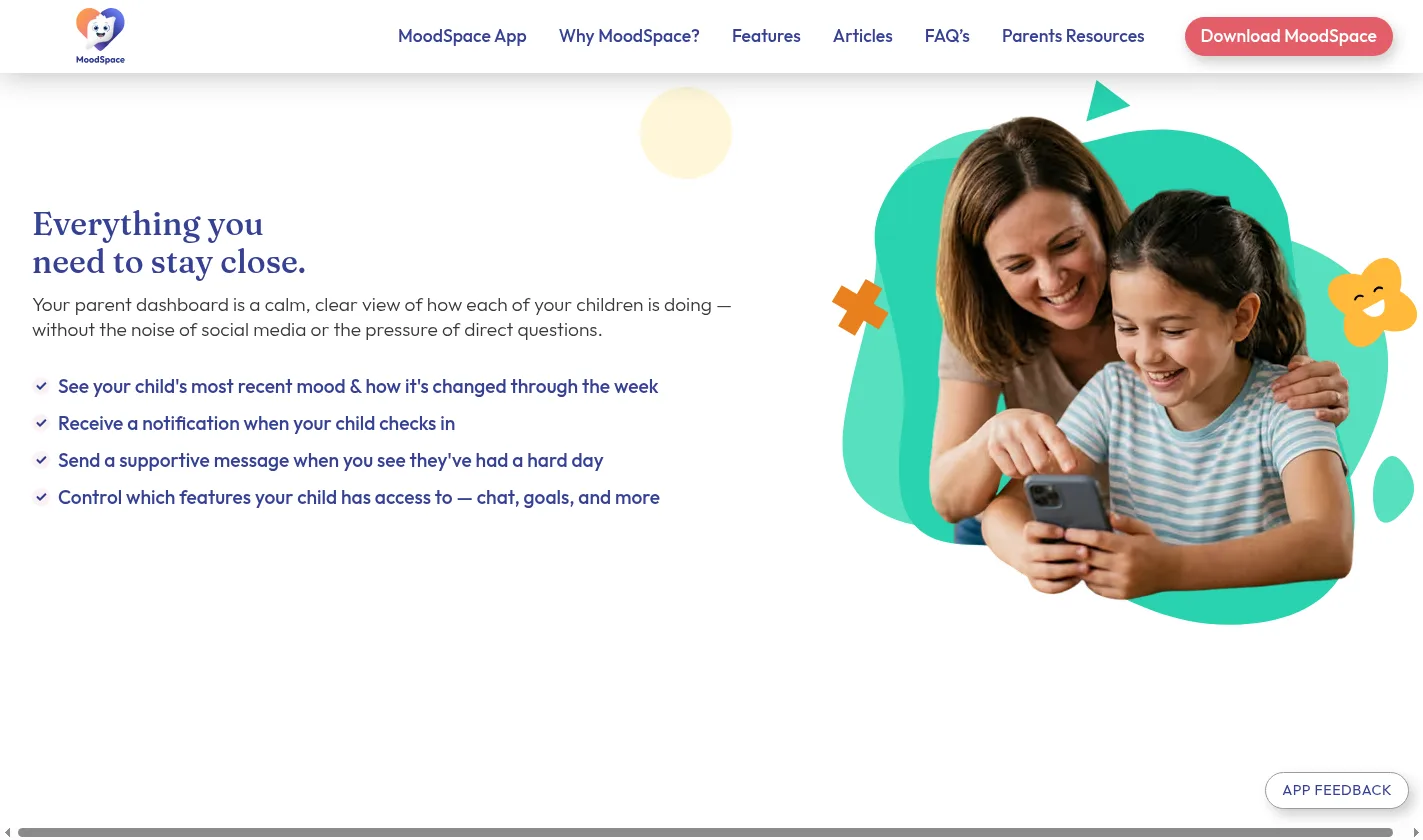
One app, two people in it The child gets a playful space with a buddy, goals and a journal. The parent gets a calm dashboard of moods, trends and notes. Same install, different worlds, with permissions in between.
Bespoke
No AI in it, and that is the point
Every warm line MoodBuddy says to a child was written and reviewed by a person. Nothing a family writes is sent to a chatbot, and nothing is used to train one.
It would have been quicker to bolt a language model onto a children's feelings app. It would also have been the wrong product. Journal entries and messages are encrypted on the device, journals are readable only by the child who wrote them, and the parent dashboard deliberately shows what the child chose to share rather than everything they typed.
No ads, no data sold, no third-party trackers reading a nine-year-old's bad day. That restraint is the feature parents actually buy.
Getting it seen
A product launch, not just a website launch
Two app stores is the easy part. Parents have to hear about it, so Fuel runs the campaign alongside the build.
The founder interview on More FM Rodney, then hosted on the site itself so the story keeps working long after the airtime ends.
Brand exposure where parents actually are: the school run, the commute, the same streets the app is used on.
Creative that leads with the real tension, a phone in the room and a conversation that is not happening, rather than app features.
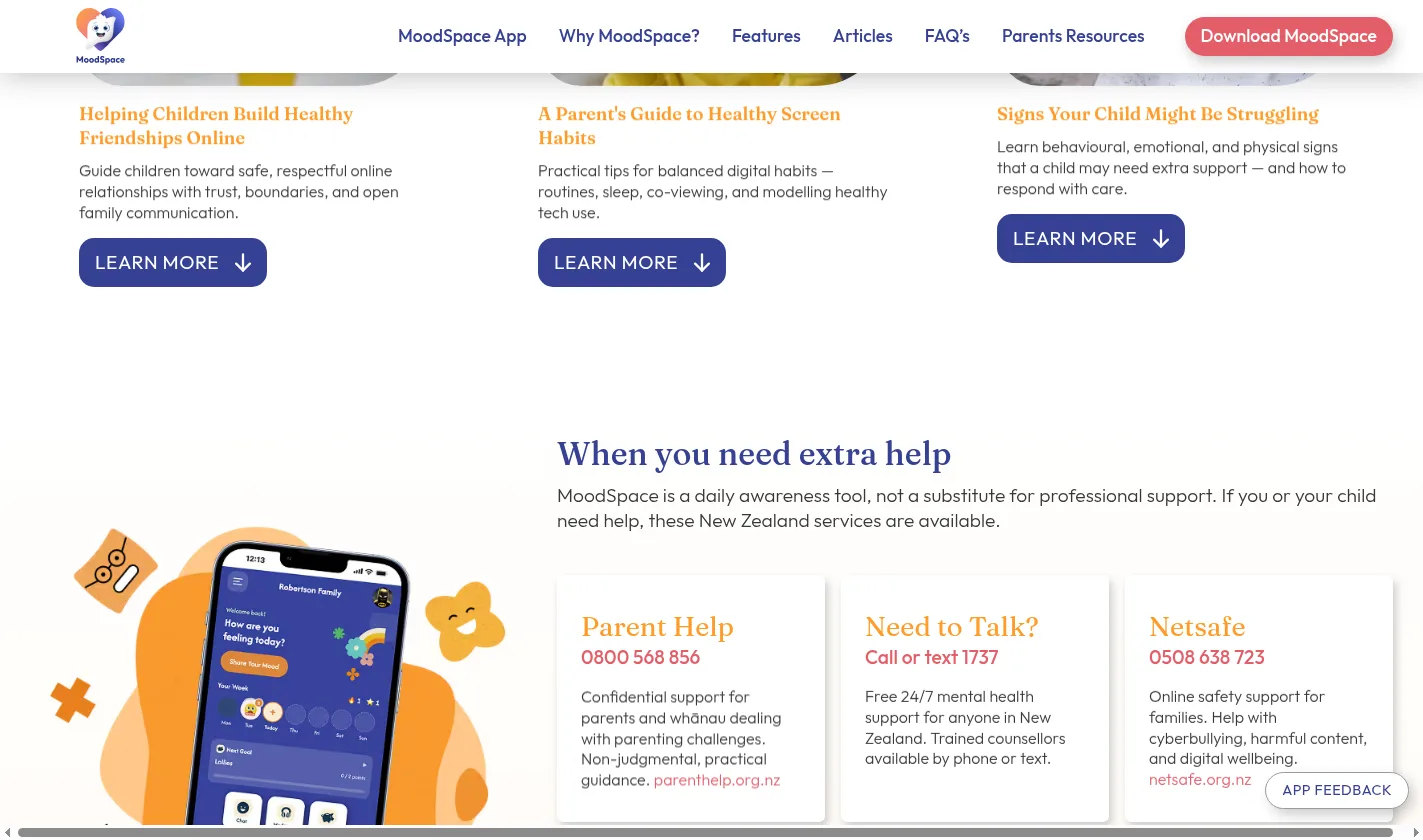
Eleven articles and counting, from screen-time habits to spotting a child who is struggling, written to earn the search as well as the read.
02 — The process
How we got there
- 01
Starting with the family, not the feature list
Years of early childhood experience turned into a product principle: support before correction, consistency over intensity, signal without pressure.
- 02
Naming and branding it
Identity, the heart mark, MoodBuddy as a character with rules about what it will and will not say, and a palette that reads as calm to a parent and fun to a child.
- 03
Designing two experiences in one app
Child and parent journeys mapped side by side, with permissions, invitations and privacy boundaries designed before a screen was built.
- 04
Building for both stores
One React Native codebase shipped to Google Play and the App Store, with encrypted messaging and journalling, subscriptions, and a release cadence measured in days.
- 05
Writing the site parents read first
Every feature explained twice, once for the child and once for the parent, plus a full FAQ, a quick-start guide and a resources hub that answers the questions the app cannot.
- 06
Taking it to market
Radio, interviews, bus backs, social and content, run as one campaign with the site as the place every channel lands.
03 — The outcome
A New Zealand product, live in both stores and still moving
MoodSpace is free to download on iOS and Android, with a premium tier for insights, chores, MoodBuddy and the family digest.
Updates ship every few days rather than every few months, the site keeps gaining articles and answers, and the campaign keeps feeding both. Fuel stays on it as the product team, not as a vendor who handed over a folder of files.
An idea from an early learning classroom is now an app on New Zealand families' phones, and a brand parents recognise from the radio.
It has been amazing working with the fuel team and I have loved the experience. Very high quality work . Highly recommend!MoodSpace
Ready for a website like this?
Let's build the next one together
Design, build, content and search, handled by one Auckland team.